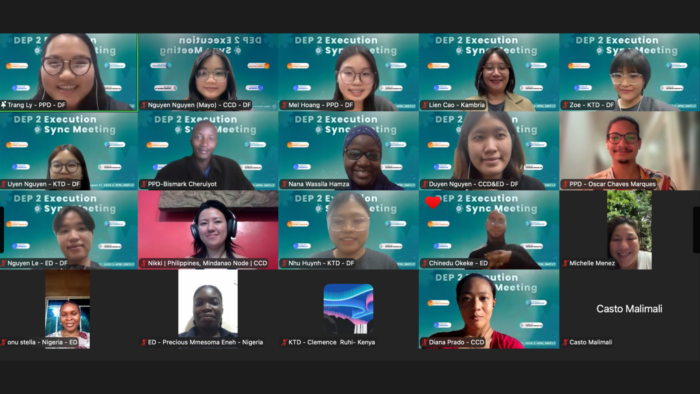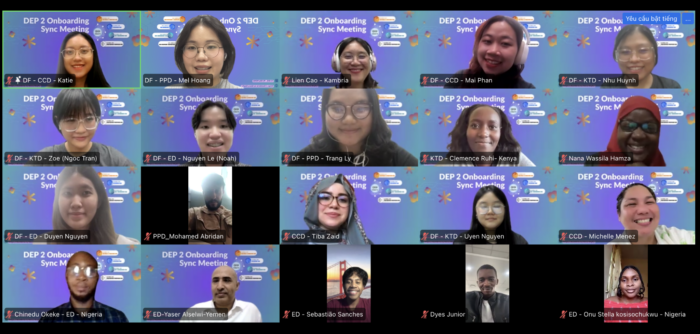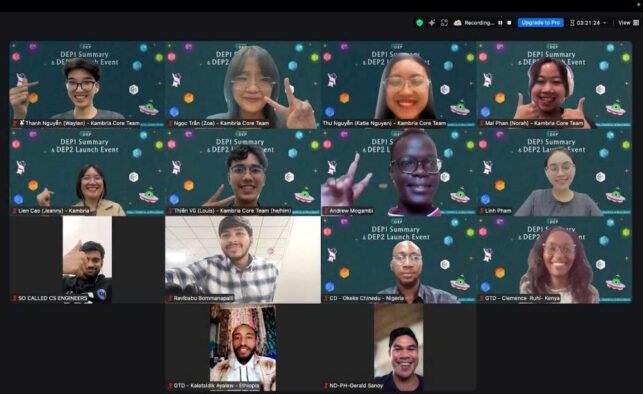
Kambria has successfully organized the DEP 2 Kickoff Event on May 22, 2026.
This Kickoff Event marks the start of our onboarding journey across all DAOs - a space to align on key dates, shared expectations, tools, and the collaborative energy we want to build together. More than an introduction, it is a chance for each DAO to connect, shape discussions around their project’s needs, and begin building strong collaboration from day one.
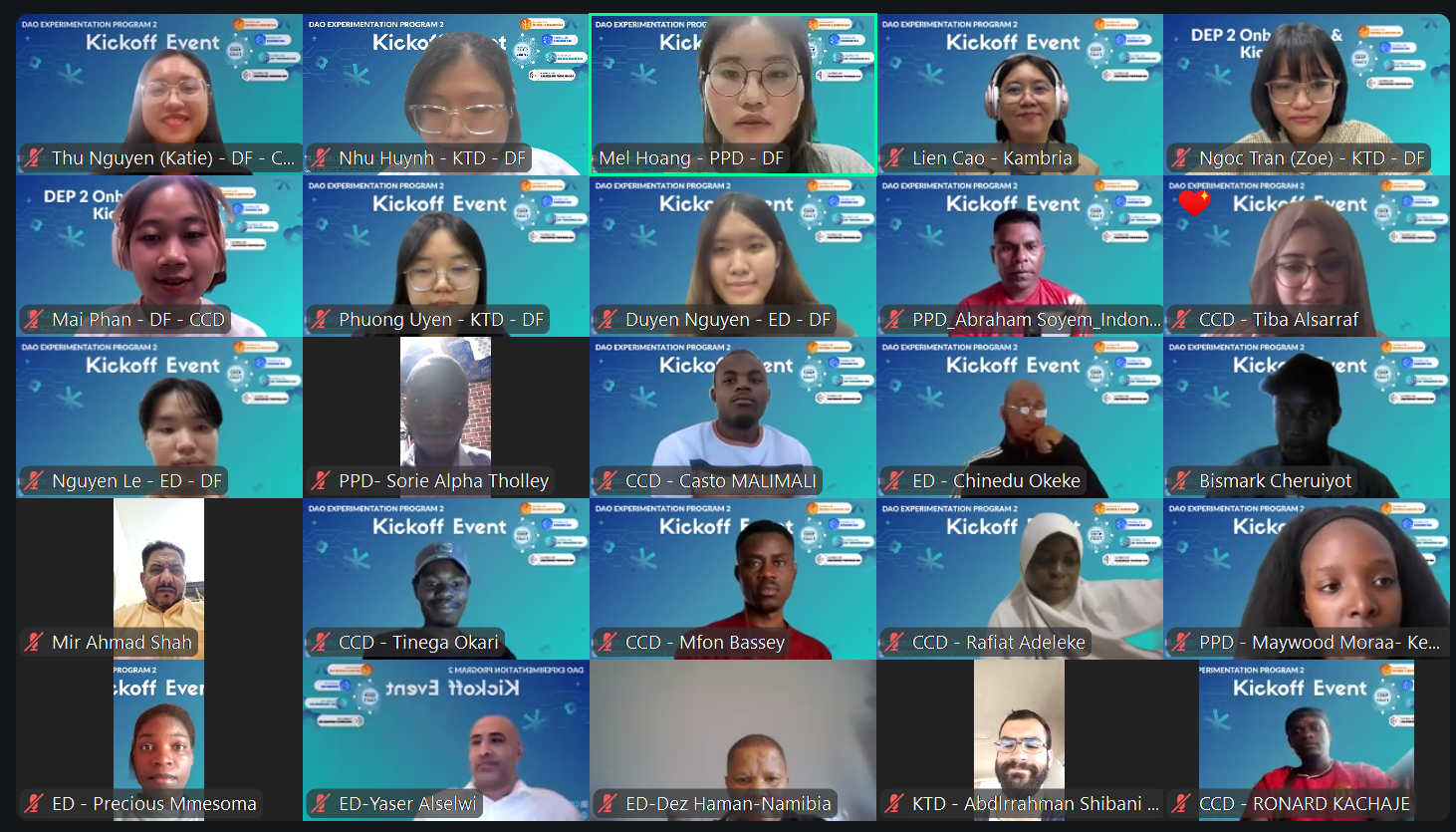
Table of Contents
- 1. Program Onboarding Overview
- 2. Q&A from the DAO Members
- 3. DAO Dedicated Sessions
- 4. Sharing Back from DAO Members
- 5. Next milestones and Heartfelt Thanks
Key Highlights:
- Program Onboarding Overview
- Q&A from the DAO Members
- DAO Dedicated Sessions, in which DAO Facilitators from each DAO share details about the initial formation of Groups and Roles, the goals and work plan, as well as the key milestones
- Sharing Back from DAO Members
- Next milestones
Esteemed Attendees:
- Ms. Liên Cao - Kambria Core Team
- DAO Facilitators of the 4 DAOs including:
- Ms. Thư Nguyễn and Ms. Mai Phan for Cultural & Creative DAO (CCD)
- Mr. Nguyên Lê and Ms. Duyên Nguyễn for Exchange DAO (ED)
- Ms. Ngọc Trần, Ms. Như Huỳnh and Ms. Uyên Nguyễn for KAT Tokenomics DAO (KTD)
- Ms. Trang Lý and Ms. Dương Hoàng for Participant-Proposed DAO (PPD)
- All DAO Members
Full video:
- - - - - 🔹 - - - - -
1. Program Onboarding Overview
During the Program Onboarding Overview session, Ms. Liên Cao from the Kambria Core Team introduced participants to the structure, workflow, and collaborative spirit of the DEP 2. The session marked the official beginning of Phase 3: Onboarding & DAO Setup, preparing members to move toward the upcoming execution phase together.
Ms. Liên Cao first reflected on the DEP 2 journey so far, highlighting the participant selection process:
- 147 registrations
- 93 participants in the Qualification Stage
- 82 participants in the Verification Stage
- 60 selected members entering the Kickoff Stage
She congratulated participants for their commitment and encouraged everyone to continue building a collaborative and impact-driven environment throughout the program.
Onboarding Hub & Program Resources
Participants were introduced to DEP 2 Docs, particularly the Onboarding Hub, which provides:
- DAO basics and terminology
- DAO tools and workflow guides
- Branding guidelines and operational policies
- Proposal and reporting templates
Ms. Liên Cao also noted that participants had already completed several onboarding milestones, including:
- Joining Kambria Discord
- Setting up MetaMask wallets
- Accessing XDAO DAO spaces
- Joining shared collaboration folders
DAO Governance & Workflow
The session also introduced key DAO concepts and governance structures, including:
- Governance tokens and proposal system
- Voting and quorum processes
- DAO collaboration principles and conflict handling
- Proposal submission and reporting workflows
Participants were guided through how ideas move from proposals to execution through structured DAO collaboration.
Main Tools Used in DEP 2
The core tools introduced during onboarding included:
- MetaMask: Wallet verification and funding access
- XDAO: Proposal submission, voting, and DAO fund management
- Google Drive Shared Folders: Documentation and working materials
- Kambria Discord: Communication and coordination across DAOs
Key Changes in DEP 2
For returning DEP 1 participants, Ms. Liên Cao highlighted three major updates:
- DEP 2 shifts from subgroups to functional teams with greater ownership and collaboration responsibilities.
- DAOs now follow a more structured governance flow:
- DAO-wide master plans
- Working groups
- Proposal development
- Weekly sync meetings
- Continuous execution reporting
- DEP 2 also places a stronger focus on experimenting with and refining the shared Intellectual Property (IP) framework.
Upcoming Milestones
Participants were reminded of the next important dates:
- Until June 19: Proposal development with DAO Facilitator guidance
- June 19: Onboarding Sync Meeting before execution
- June 22: Proposal submission on XDAO and start of 7-day voting period
- June 29: Voting period concludes
Before closing, Ms. Liên Cao encouraged all participants to regularly check Discord and email, as they remain the primary communication channels throughout the DEP 2 journey.
Rewatch at this link:
***
2. Q&A from the DAO Members
In this Session, each DAO Facilitator shared answers for key questions noted from DAO Members.
KAT Tokenomics DAO
Question: “I would like to ask if there are any preparatory materials or frameworks (especially related to tokenomics design, governance models, or evaluation criteria) that we should review before the kickoff session to maximize our contribution.” - Abdlrrahman Shibani
Answer: Yes. Participants are encouraged to review the core DEP 2 materials before the kickoff event to build shared context around:
- DAO Introduction: https://kambria.io/docs/dep2/dao-projects-overview/kat-tokenomics-dao/
- Member Roles and Contributions
- DAO Leaders and Working Group Leaders will coordinate and collaborate closely with other members to complete the templates below.
- The DAO Facilitator will also provide clear guidance and timely reminders throughout each stage of the process.
- Master Plan: Template | Example | Qualification Checklist
- Working Group Plan: Template | Example | Qualification Checklist
- Report: Template
- KAT for Contribution Recognition: Link
- That said, DEP 2 is intentionally designed to be multidisciplinary and beginner-friendly. Participants are not expected to already be experts in tokenomics or blockchain systems. A major goal of the cohort is collaborative learning through experimentation and real participation.
- Additional templates, onboarding guides, and DAO-specific frameworks will also be shared progressively during the program.
Participant-Proposed DAO
Question: “What are the expected outcomes or deliverables for participants during the program?” - Bismark Cheruyot
Answer: DEP 2 is structured around both individual contribution and collective DAO-level impact.
- At the DAO level, each DAO has specific impact and regeneration goals. For example:
- The Cultural & Creative DAO aims to co-create 400 cultural expressions
- The Exchange DAO aims to facilitate 500 meaningful 1–1 sessions
- The KAT Tokenomics DAO focuses on building the KAT Reward & Privilege Framework, MVP dashboard, and symbolic testnet systems
- At the participant level, expected outcomes may include:
- Active participation in Working Groups
- Contribution to DAO deliverables
- Collaboration across teams
- Governance participation
- Documentation
- Experimentation
- Community coordination
- Deliverables may varydepending on a participant’s role and Working Group, but generally include:
- Execution outputs
- Reports
- Prototypes
- Workshops
- Coordination support
- Storytelling
- or Operational contributions
DEP 2 emphasizes meaningful participation, collaboration, and learning over rigid task completion.
---
We will share answers for other questions on DEP Docs, kindly check the link for more information: Link.
Rewatch at this link:
***
3. DAO Dedicated Sessions
In this Session, DAO Facilitators from each DAO share details about the initial formation of Groups and Roles, the goals and work plan, as well as the key milestones
Cultural & Creative DAO (CCD):
During the CCD Dedicated Session, Ms. Mai Phan introduced members to the overall direction and onboarding structure of the Cultural & Creative DAO (CCD). She explained that CCD is envisioned as a collaborative space where members from different regions and backgrounds can co-create meaningful cultural and creative outputs together. More than a DAO for producing content, CCD was framed as a space for connection, experimentation, and long-term community building through culture, storytelling, and shared creative expression.
The session highlighted CCD’s core ambition of creating and sharing 400+ cultural and creative works, while also working toward a regeneration target of at least 3,000 USDT. Members were introduced to what success could look like for the DAO, including not only the quantity of creative outputs, but also the quality of participation, the diversity of expressions, and the strength of documentation that would eventually contribute to a Creative Impact Report.
To help members begin connecting from the start, the facilitator introduced the Intro Card / Padlet space, where participants could share about themselves, explore others’ introductions, and begin identifying people they resonated with. CCD’s initial structure was also presented through four core Working Groups:
- Execution – focused on producing creative outputs and activities
- Regeneration – focused on sustainability, partnerships, and revenue pathways
- Documentation – focused on archiving activities and capturing the DAO’s impact story
- Coordination – focused on communication, governance, and overall DAO alignment
In addition, the facilitator walked members through the purpose of the Master Plan, Working Group Plan, and Qualification Checklist, explaining how these documents would help align the DAO’s direction, shape group-level contributions, and prepare members for proposal development and voting. Immediate next steps included reviewing group assignments, reading the Intro Card and initial role setup, sharing feedback by May 24, 2026, and continuing discussion through the exclusive CCD Discord channel as the DAO moved toward the next onboarding milestones.
Highlights from DAO Members
After the facilitator’s presentation, members were invited to briefly introduce themselves and share why they joined Cultural & Creative DAO.
- Michelle Andrea Menez (Mitch) from the Philippines reflected on her experience in DEP 1, where she collaborated with members from Kenya, India, Ethiopia, and Vietnam. She shared that one of her main reasons for returning to DEP 2 was the chance to both share the richness of Philippine culture and continue learning from the cultures of others through technology and collaboration.
- Mfon Bassey from Nigeria shared that his love for creativity made CCD especially meaningful to him. He described the DAO as an exciting opportunity to learn directly from people in other countries while also sharing Nigeria’s cultural richness and creative energy with the wider community.
- Fatma Razik from Kenya expressed that she was drawn to CCD because it offers a space to help preserve and reawaken cultural heritage, especially at a time when traditional cultures can feel increasingly diluted or forgotten. For her, CCD is not only about creativity, but also about helping younger generations reconnect with culture, appreciate diverse traditions, and express themselves in more natural and human ways.
Together, these early reflections showed that CCD is already becoming more than a project-based DAO. It is beginning to take shape as a meeting point for people who want to connect across cultures, share stories, preserve traditions, and build meaningful impact through creativity.
Rewatch at this link:
Exchange DAO (ED):
The Exchange DAO (ED) session was facilitated by Mr. Nguyên Lê and Ms. Duyên Nguyễn, who introduced the DAO’s overall direction, working group structure, key roles, and upcoming milestones. The facilitator introduced ED as a space for meaningful real-time 1–1 online learning and connection through the CED platform. Members were guided through the DAO’s key goals, including completing 500+ meaningful 1–1 sessions, building a network of guides and explorers, and regenerating value through partnerships and exchange activities.
The facilitator also introduced the Padlet as a shared space for members to read each other’s intro cards, understand different backgrounds, and start connecting with potential collaborators.
The session then moved through the initial working groups, member roles, timeline, master plan, working group plan, and next steps for proposal preparation. Members were reminded to vote for the weekly meeting time slot, review their intro cards and role assignments, start team discussions, and communicate through the ED Discord channel.
ED is organized into several working groups:
- Session Design and Facilitation: designs session formats, onboarding guides, and maintains session quality.
- Documentation and Learning: records session logs, validates evidence, and prepares reports and learning archives.
- Communication and Community: supports announcements, recap posts, visual content, and community storytelling.
- Regeneration and Partnership: builds partnerships, sponsorships, and sustainable exchange models.
- Coordination Layer: supports governance, weekly syncs, proposal flow, and communication with the DEP organizers.
Key next steps include finalizing the master plan, preparing working group plans, submitting proposals on XDAO, and moving into execution after approval.
Highlights from DAO Members
After the facilitator’s presentation, members were invited to briefly introduce themselves and share why they joined.
- Dr. Shah Mir from Pakistan shared his background in education and teacher training. He joined ED to meet like-minded people, learn from others, and share his experience supporting community education.
- Okeke Chinedu Emmanuel from Nigeria reflected on his DEP 1 experience and joined ED to support structured peer-to-peer learning and communication across countries.
- Desiree Haman from Namibia shared her interest in community-led processes and joined ED to learn how communities can work together and lead themselves.
Rewatch at this link:
KAT Tokenomics DAO (KTD):
The KAT Tokenomics DAO (KTD) session was facilitated by Ms. Ngọc Trần, Ms. Như Huỳnh, and Ms. Uyên Nguyễn. The session began with Ms. Ngọc welcoming KTD members and walking them through the purpose of KTD, its working group structure, timeline, and master plan. The facilitator explained that KTD will act as the infrastructure DAO for DEP 2, focusing on the KAT Reward & Privilege Framework as a symbolic, non-financial recognition system.
Members were reminded that KTD is not only building for itself, but also creating frameworks, templates, and prototypes that other DAOs in the cohort can apply.
The facilitator introduced the Padlet intro space and encouraged members to review each other’s cards, as they will be working together over the next few months. The session then covered the four working groups, provisional role assignments, coordination layer, key deadlines, master plan requirements, and proposal preparation. Members were asked to review their assignments, raise suggestions, vote for weekly meeting time slots, begin team discussions, and check the KTD milestones on DEP 2 Docs.
KTD is structured into four working groups:
- Framework Application: configures the KAT framework for other DAOs and creates templates.
- System Prototyping: designs workflows, dashboard prototypes, and automation ideas.
- DAO Support and Audit: reviews DAO submissions, checks contribution logic, and supports quality assurance.
- Documentation and Learning: writes guides, organizes knowledge, and documents lessons learned.
Contributions are recognized across governance, community, impact, learning, documentation, and technical infrastructure. Key next steps include reviewing working group assignments, voting for weekly meeting times, finalizing the master plan, preparing working group plans, and submitting proposals for XDAO voting.
Highlights from DAO Members
After the facilitator’s presentation, members were invited to briefly introduce themselves and share why they joined.
- Mariel Juan from the Philippines shared her background in project accounting and financial planning. She joined KTD to learn about digital economies, fair reward systems, and sustainable community growth.
- Shibani from Libya shared his background in software development, startups, analytics, and AI. He sees DAO work as an impactful way to support people from different backgrounds.
- Andrew Mogambi from Kenya shared his DEP 1 experience and described KTD as a key connection point across DAOs. He emphasized the importance of early team connection and collaboration.
Rewatch at this link:
Participant-Proposed DAO (PPD):
During the Participant-Proposed DAO (PPD) Dedicated Session, Ms. Dương Hoàng introduced members to the overall direction and onboarding structure of the PPD. She explained that PPD is a community-selected, co-created DAO, originally designed so participants could submit project ideas during the application phase and the community could vote to choose the fourth DAO of Cohort 2. For this cohort, the selected direction presented in the session was PesaPlay DAO, an educational initiative aiming to deploy interactive, animated e-learning modules to provide gamified financial literacy training for children in Kenya. The facilitator also clarified what success would look like for PPD: delivering the impact goal, regenerating at least 3,000 USDT, publishing documentation and stories, sharing clear evidence of community benefit, and presenting outcomes during the cohort-wide showcase.
To help members start connecting early, the session invited them to complete their Intro Card and read one another’s introductions as a first step toward building relationships inside the DAO. Duong then introduced the initial working structure of PPD, explaining that the DAO would organize itself through four core Working Groups:
- Execution Working Group – focused on creating outputs that directly achieve the DAO’s impact goal
- Regeneration Working Group – focused on partnerships, revenue pathways, and achieving the 3,000 USDT regeneration goal
- Documentation Working Group – focused on preserving records, collecting evidence, and telling the DAO’s impact story
- Coordination Working Group – focused on internal communication, governance flow, and keeping collaboration smooth across members and groups
Members were also introduced to the five contribution dimensions used across the DAO – Impact, Regeneration, Governance, Community, and Documentation – as a way to understand how different forms of participation would support the DAO’s overall operation.
The session then moved into the planning and governance flow for PPD. Ms. Dương Hoàng explained the purpose of the Master Plan, Working Group Plan, and Qualification Checklist, emphasizing that the DAO would first align on an overall direction through the Master Plan, then translate that direction into group-level proposals, before moving through facilitator review and finally into XDAO voting. She also pointed members to the example materials included in the deck – especially the sample Master Plan based on the PesaPlay initiative — as a structural reference for shaping their own proposals. Members were guided through the early work plan and next milestones, including reviewing Intro Cards and role assignments, sharing suggestions by May 24, 2026, beginning discussion to finalize the Master Plan, continuing communication in the exclusive #participant-proposed-dao Discord channel, and preparing for the next key milestones: proposal drafting through early June, the Onboarding Sync Meeting on June 19, and proposal submission and voting on XDAO from June 22–29, 2026.
Highlights from DAO Members
After the facilitator’s presentation, members were invited to briefly introduce themselves and share why they joined.
- Maywood Moraa, the proposer behind PesaPlay, shared her gratitude to the Kambria team for creating the Participant-Proposed DAO pathway, noting that it gave members the chance to bring real community challenges into the program and test solutions that could be adapted across countries. She also expressed excitement about building a strong working environment within what she described as the inaugural cohort of PPD.
- Mohamed Abridan introduced himself through the story behind his project Dignity Cut, which grew from his personal experience and advocacy around autism inclusion. He briefly shared recognitions connected to that work and expressed his happiness at being part of the team.
- Bismark Cheruiyot explained that he was motivated to join PPD because he enjoys working on meaningful technology projects while learning from a global community. He highlighted that the DAO’s focus on collaboration and decentralized innovation matched his interest in building practical solutions and participating in spaces where ideas are shared openly to solve real problems.
- Nana Wassila also shared that joining PPD felt like a unique opportunity to learn, contribute, and grow, especially given her passion for youth empowerment and community development.
Together, these early reflections showed that PPD is already taking shape as more than a proposal-based experiment. It is becoming a space where people bring community-rooted ideas, personal conviction, and collaborative energy into a shared process of building practical and impactful solutions.
Rewatch at this link:
***
4. Sharing Back from DAO Members
Following the DAO Dedicated Sessions’ presentations, the Event continued with a light and interactive mini game session hosted by Ms. Mai Phan. The activity was designed to help participants revisit key information shared throughout the Event while creating a more connected and energetic atmosphere among DAO members.
Using an interactive platform accessed through QR code and participation code, members from all four DAOs – CCD, ED, KTD, and PPD – joined the session together. Ms. Mai Phan encouraged participants to not only review important program information, but also share their emotions, expectations, and motivations for joining DEP 2.
Community Energy & First Impressions
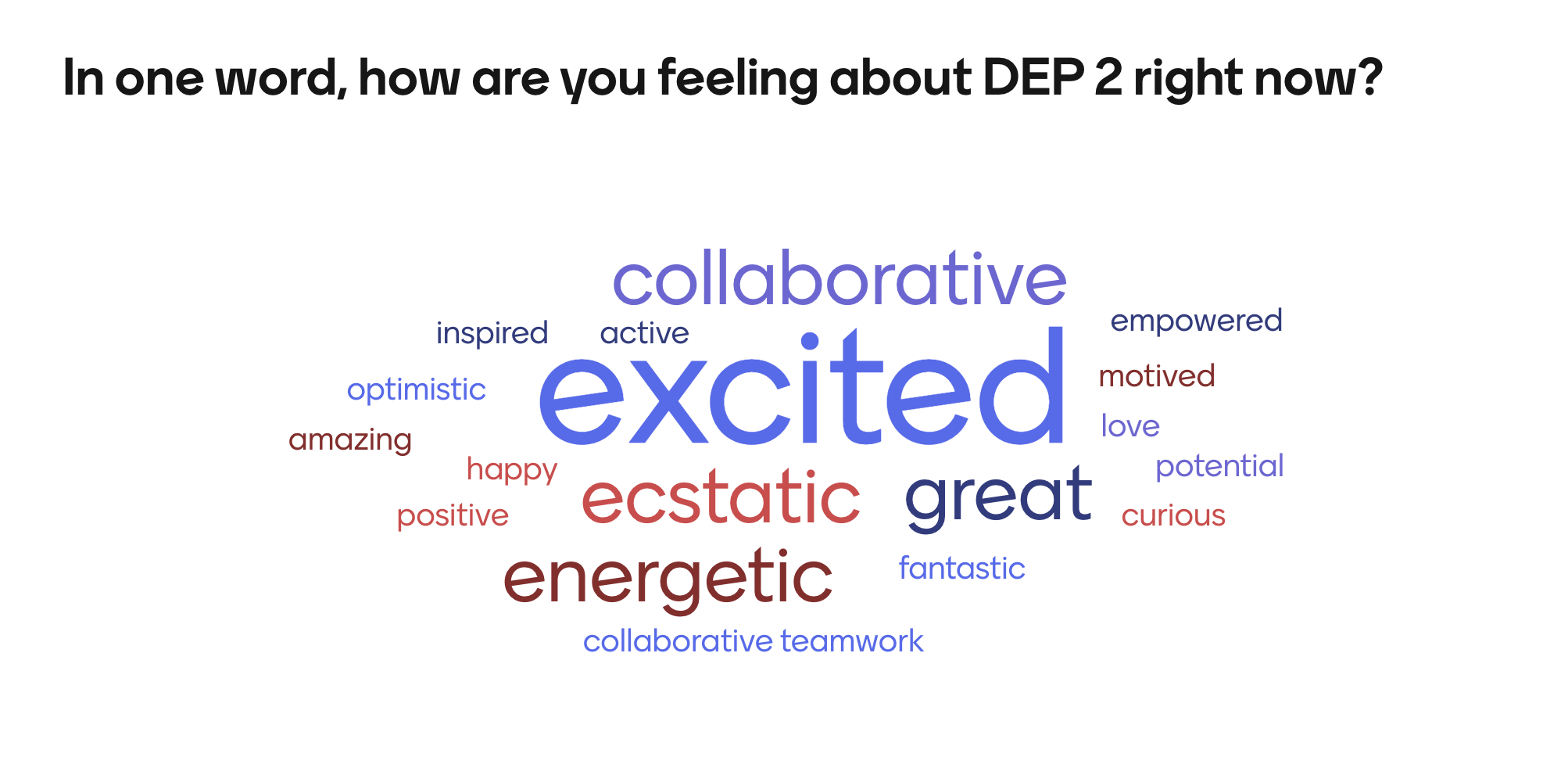
One of the first activities invited participants to describe their feelings about DEP 2 in one word. The responses reflected a highly positive and collaborative atmosphere, with words such as:
- Excited
- Collaborative
- Optimistic
- Happy
- Empowered
- Love
- Potential
- Genesis
Mai shared her appreciation for the emotional energy in the room and expressed hope that participants would continue carrying this excitement, curiosity, and openness throughout the journey ahead.
Participants’ Aspirations & Contributions
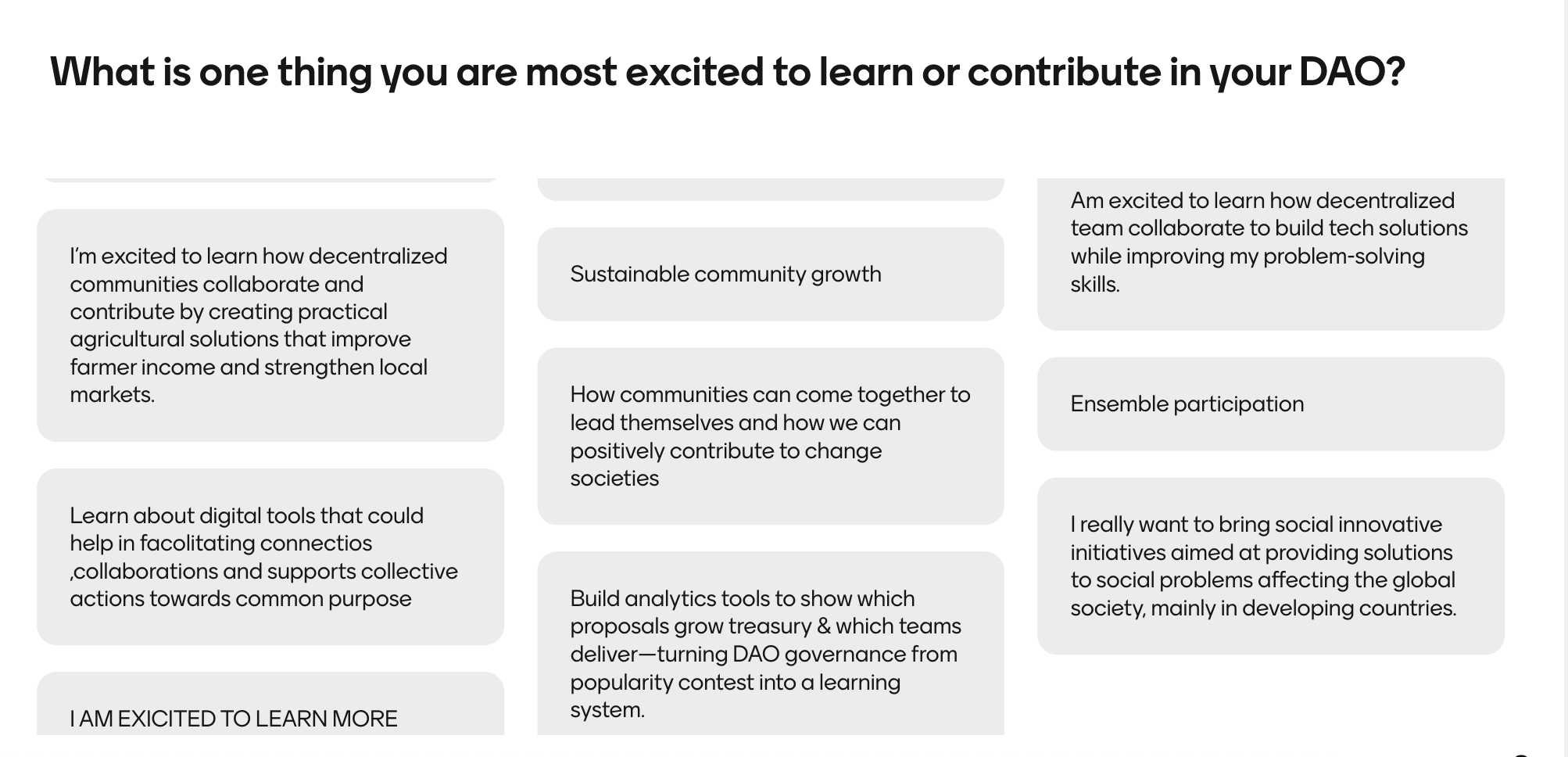
The session also invited DAO members to share what they were most excited to learn or contribute within their DAOs. Responses highlighted strong interests in:
- Decentralized collaboration and governance
- Community-driven agricultural solutions
- Sustainable cultural collaboration
- Community growth and social impact
- Building technology solutions collaboratively
- Exploring regenerative and inclusive systems
Ms. Mai Phan noted that the responses reflected not only curiosity, but also a genuine willingness to contribute, collaborate, and grow together as a community.
Revisiting Key DEP 2 Information Through Quiz Activities
The mini game also included several recap questions based on information shared earlier during the kickoff event. Key topics included:
- XDAO is the platform used for proposal voting, funding, and DAO coordination.
- CCD’s target of supporting 400+ creative expressions.
- ED facilitates one-on-one sessions as well as through the CED platform.
- KTD’s focus is on developing a shared non-financial task reward and privilege framework.
- PPD as the DAO centered around participant-proposed initiatives.
- Important upcoming milestones, including:
- June 19, 2026: Onboarding Sync Meeting
- June 22 – 29, 2026: Proposal submission and voting period on XDAO
Throughout the activity, the atmosphere remained highly interactive, encouraging participants to actively engage while reinforcing important program knowledge in a fun and accessible way.
Closing Reflections
Before concluding the session, Ms. Mai Phan thanked all participants for their energy, openness, and participation. She emphasized that DEP 2 is not only about tasks and execution, but also about the people involved, the lessons shared, and the collective growth experienced throughout the journey.
The mini game ultimately served as both a recap and a community-building moment, helping participants reconnect with the program’s vision while strengthening the sense of collaboration and shared purpose across all DAOs.
Rewatch at this link:
***
5. Next milestones and Heartfelt Thanks
The next milestones include:
- Read your team's Intro card as well as the Working Group and Initial Roles assignment and share suggestions if any with your DAO Facilitators. (By May 24, 2026)
- Take initial steps to discuss with your team to finalize the Master Plan.
- Communicate on the exclusive Discord channel for your DAO.
- Submit Master Plan + Working Group Plan to DAO Facilitators (via Drive): Jun 8 – Jun 12.
- Onboarding Sync Meeting (share updates across all DAOs, good practices, onboarding feedback form): Jun 19.
- Submit Proposal and Voting on XDAO: Jun 22 – Jun 29.
For full details, you can always check the official website: https://kambria.io/docs/dep2/program-timeline/
Thank you once again to all our participants for being part of today’s session. Your presence and insights made the conversation truly meaningful, and we’re excited for the future collaborations and impact we can continue building together. Stay connected with us on the Kambria Discord for more updates and conversations ahead – and if you have any thoughts or questions, feel free to reach out anytime. Until next time, take care and keep inspiring positive change!
Rewatch at this link: