Table of Contents
- 1. Onboarding Sync Overview
- 2. Proposal Preview and Q&A
- 3. Share Onboarding Phase Feedback
- 4. Next milestones and Heartfelt Thanks
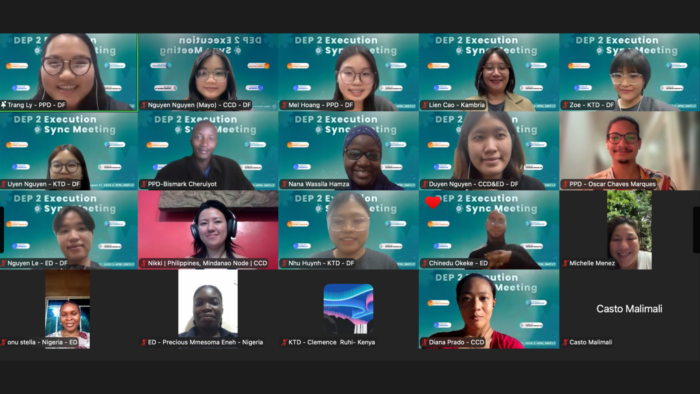
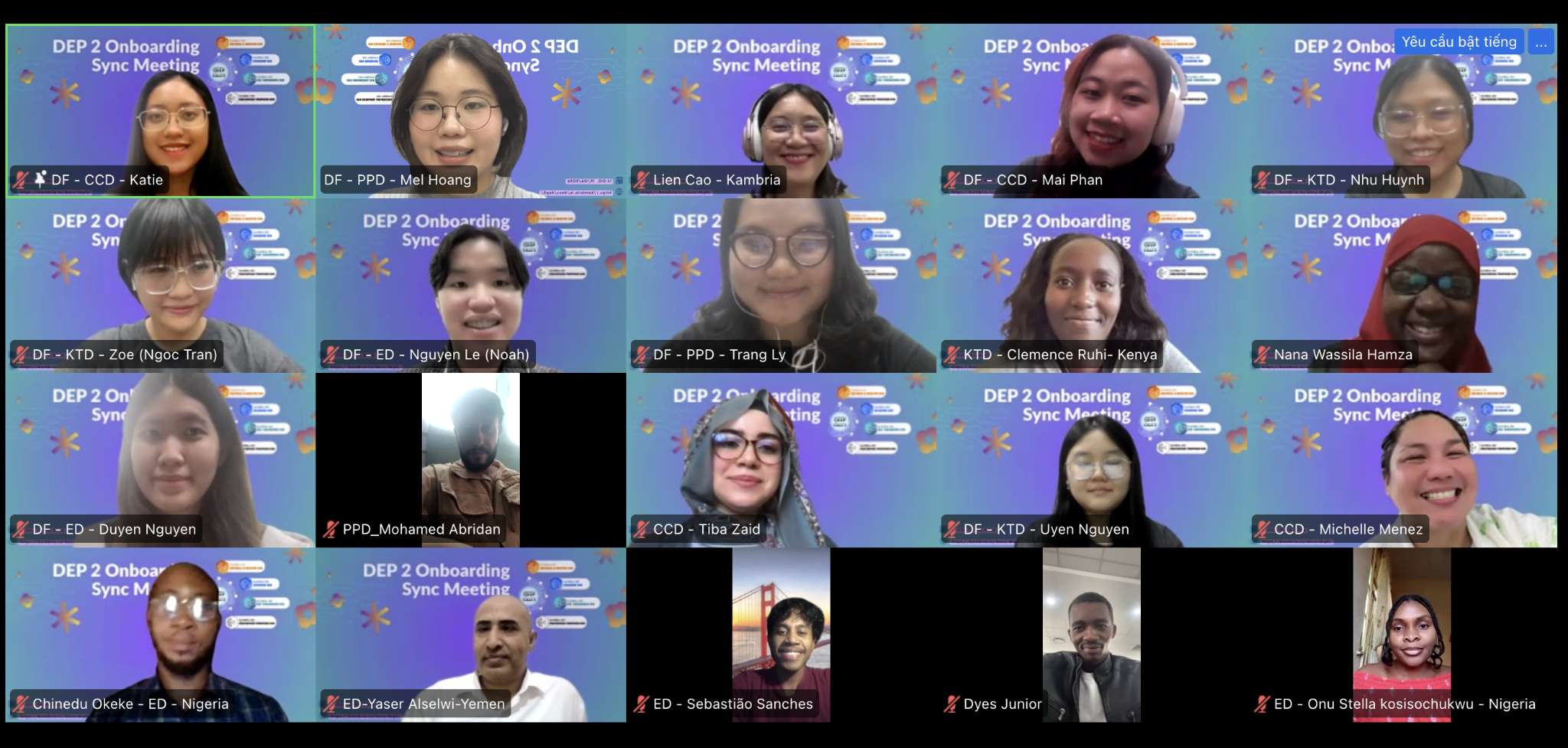
Kambria has successfully organized the DEP 2 Onboarding Sync Meeting on June 19, 2026.
This Meeting is for DAO Groups to present the proposals for final feedback and insights gained from all members (including those from other DAOs), ensuring members are well-prepared for the upcoming vote. This session also serves as a last opportunity to refine the proposal, promote the project, and invite volunteers - particularly DAO members based near the implementation site.
Key Highlights:
- Onboarding Sync Overview
- Proposal Preview and Q&A
- Share Onboarding Phase Feedback
- Next milestones and Heartfelt Thanks
Esteemed Attendees:
- Ms. Liên Cao - Kambria Core Team
- DAO Facilitators of the 4 DAOs including:
- Mai Phan and Thư Nguyễn for Cultural & Creative DAO (CCD)
- Nguyên Lê and Duyên Nguyễn for Exchange DAO (ED)
- Ngọc Trần, Như Huỳnh, and Uyên Nguyễn for KAT Tokenomics DAO (KTD)
- Trang Lý and Dương Hoàng for Participant-Proposed DAO (PPD)
- All DAO Members
Full video:
- - - - - 🔹 - - - - -
1. Onboarding Sync Overview
From Onboarding to Execution: Preparing DEP 2 DAOs for the Next Chapter
As the Onboarding Phase of DEP 2 comes to a close, participants gathered to align on what comes next: transitioning from planning into execution. The session served as both a reflection on the journey so far and a practical guide to the proposal, voting, and funding processes that will shape the next phase of DAO activities.
Looking Back: Completing the Onboarding Journey
The presentation opened with a review of the DEP 2 timeline, highlighting that all DAOs have now reached the end of the Onboarding Phase and are preparing to enter the main execution stage. Members have completed key onboarding requirements and are now focused on finalizing and submitting their DAO proposals.
The sharing was designed around several objectives:
- Aligning all DAOs before entering the execution phase;
- Understanding how proposal submission and voting function within each DAO;
- Reviewing DAO proposals and addressing questions;
- Reflecting on lessons learned from onboarding; and
- Reinforcing keystones, documentation practices, and DAO norms.
Key Milestones Ahead
Participants were introduced to the upcoming timeline for proposal approval and fund distribution.
- On June 19, DAOs received a preview of the proposal process.
- By June 29, all proposals are expected to be submitted through the Create Proposal feature on XDAO, initiating a seven-day voting period that will run until July 6.
- Once proposals are approved, the first payment process is scheduled to be completed by July 13.
These workflows will be managed through XDAO, where each DAO has its own dedicated space to submit proposals, vote, and oversee DAO funds.
Exploring Governance Through XDAO
The session also introduced participants to the opportunities and challenges of working with blockchain-based governance tools.
On one hand, DAO platforms offer greater transparency, automation, and trust, enabling communities to operate with increased autonomy. At the same time, blockchain technologies remain in an early stage of development and may present technical barriers or less intuitive user experiences.
Participants were encouraged to approach these tools with an exploratory and experimental mindset, recognizing that learning by doing is part of the journey.
For many members, interacting with XDAO means experiencing familiar processes in a new way. Instead of logging into a traditional website, users connect their wallets through MetaMask, with confirmations recorded on-chain and wallet addresses serving as digital signatures.
Proposal Submission and Voting
The current stage focuses exclusively on proposal approval, with no funds transferred during the initial voting process.
DAO representatives are expected to submit their Master Plans and Working Group proposals through XDAO. Proposals that have undergone preliminary qualification by DAO Facilitators will be included in the DAO Voting Tracking Sheet, where members can review and cast their votes.
During the seven-day voting period, members are encouraged to actively participate as reviewers and decision-makers. Voting involves reviewing proposal details, selecting a voting option, and confirming the transaction through MetaMask.
The presentation emphasized that governance is a shared responsibility. Every member has the opportunity to contribute their perspective and help determine which proposals move forward.
Funding Workflow and Transparency
Once a proposal passes, DAO Facilitators will initiate a Send Token Voting process to distribute the first payment.
DEP 2 follows a 70 – 30 payment model, where an initial payment is released upon approval, while the remaining funds are allocated after execution and submission of a qualified completion report.
Payment requests are conducted through a dedicated voting process using USDT. Following approval, transactions are automatically processed from the DAO wallet to the designated recipient wallet.
One of the advantages highlighted during the session was blockchain transparency. DAO members can view transaction histories directly within XDAO and access publicly available transaction details through PolyScan, providing visibility comparable to reviewing a public financial statement.
Strengthening Active Participation
The meeting also addressed participant engagement and how DEP 2 intends to support active contributors.
During the Onboarding Phase, some members demonstrated high levels of participation, while others were still finding their place within the program. Rather than removing inactive members, as was done in DEP 1, DEP 2 introduces a different approach: increasing the influence of active contributors through governance tokens.
Active members will receive an additional governance token after each phase based on their participation and contributions to DAO deliverables. Greater voting influence is accompanied by the opportunity to recommend one or two new members who can help strengthen DAO capacity and execution.
In cases where Working Groups require stronger leadership, DAOs are encouraged to discuss potential leadership rotations to ensure readiness for the execution phase.
Several key milestones have been set to support this process, including identifying active contributors, allocating additional governance tokens, reviewing member recommendations, and assessing Working Group leadership structures.
Moving Forward Together
As DEP 2 enters its execution phase, the focus shifts from preparation to action. The onboarding period has provided members with the tools, frameworks, and governance mechanisms needed to begin implementing their ideas.
The next phase will rely not only on systems and processes, but also on the continued commitment of members to participate actively, collaborate meaningfully, and help shape the future of their DAOs. With proposals ready for voting and execution on the horizon, DEP 2 is taking its next step toward turning plans into impact.
Video:
Proposal Workflows: XDAO Quick Start Guide
2. Proposal Preview and Q&A
Cultural & Creative DAO (CCD)
Members presented their initial drafted proposals
The Cultural & Creative DAO (CCD) was represented by Michelle Andrea Meñez, who presented the team’s initial draft proposal during the Onboarding Sync Meeting. Michelle opened the session by thanking CCD members for their continued presence across different time zones and highlighted that the proposal had been shaped collectively with support from the wider DAO team.
In the presentation, CCD introduced its proposed impact goal of producing 400 verified cultural and creative outputs and its regeneration goal of generating at least 3,000 USDT through partnerships, sponsorships, workshops, showcases, publications, and cultural products. The team explained that this approach was designed to test decentralized cultural impact while building replicable regenerative value cycles that align with Kambria’s longer-term vision. The proposal focused on four proposed regional cultural nodes - Luzon, Visayas, Mindanao, and NCR, and emphasized a tone and spirit that is community-centered, respectful and ethical, inclusive and collaborative, creative and practical, and regenerative in orientation.
Michelle also walked participants through the DAO’s initial structure and role distribution. The proposal identified Michelle Andrea Meñez as DAO Lead, Tiba Zaid as Coordination Lead, Mfon Bassey as Creative Production Lead, Rafiat Adeleke as Archive & Knowledge Lead, Casto Malimali as Regeneration Lead, and Ronard Kachaje as Cultural Documentation Lead. Additional members introduced in the proposal included Fatma Razik, Fatiah Chindo, Tinega Okari, Egbe Faith, Ngailily Chimala, and Padmore Yankey, each connected to specific working group responsibilities.
The presentation then outlined CCD’s initial Master Plan and Working Group Plans. The overall direction centered on preserving and amplifying cultural knowledge, connecting Philippine communities with DAO members through global-local collaboration, and producing measurable cultural outputs while testing regenerative models. The proposal organized execution into four working groups: Coordination, Execution, Documentation, and Regeneration, with a strategic workflow moving from community documentation to creative production, archive and knowledge, and finally regeneration and partnerships. The team also presented target outputs across the working groups, a 3,000 USDT budget request, a 70–30 funding release schedule, and initial external partners across the three cultural nodes: Kawayan Collective Tarlac, Modern Ilongga, and Balay Kasamtangan.
Feedback and insights from the DAO Facilitators
Following the presentation, the DAO Facilitators shared feedback on CCD’s proposal. They first highlighted several strengths. CCD was recognized for its strategic responsiveness, with the Facilitators noting the team’s responsibility, solution-oriented mindset, and the important role played by Michelle Andrea Meñez, Mfon Bassey, and other committed members in maintaining momentum despite challenges. The Facilitators also emphasized CCD’s vision-driven mission, describing the proposal as a meaningful effort to empower local Philippine communities while leveraging the broader expertise of the global DAO network. In addition, they noted the proposal’s growing financial accountability, particularly the team’s recognition of the 70–30 budget release structure, and they praised the strong alignment between the four working groups and the DAO’s overall mission and workflow.
The Facilitators also suggested several areas for further improvement before finalization. First, they recommended stronger workflow synchronization, especially because the Creative Production Working Group and Regeneration Working Group depend on materials from the Cultural Documentation Working Group; weekly synchronization was encouraged to reduce delays. Second, they advised establishing an early data quality control process, since many CCD outputs would rely on field photos and audio documentation. Third, they pointed to the need for better financial liquidity planning, suggesting that the first tranche of released funds should prioritize essential operational expenses such as internet or data support. Finally, they emphasized regeneration readiness, recommending that CCD prepare sponsorship or outreach materials early so regeneration-related activities could begin more smoothly. Overall, the feedback encouraged the team to strengthen coordination, quality control, financial readiness, and outreach efficiency while preserving the proposal’s strong mission and structure.
Open discussion
The open discussion that followed invited both members from other DAOs and CCD members to respond to the proposal. Okeke from Exchange DAO (ED) shared positive feedback on the presentation and raised a practical question about whether CCD’s cultural-sharing activities would include remote interaction, or whether they would be limited to physical meetups. He suggested that if CCD planned remote cultural exchanges, there could be room for future collaboration through Exchange DAO’s CED platform.
Another participant, Dr. Amit Saha, also praised the presentation and asked whether the DAOs could have a more common or centralized way of recording sessions and documentation so that feedback and materials could be collected more systematically across all groups. In response, the host explained that the meeting was being recorded, that questions and answers from the chat would also be collected, and that key suggestions and follow-up points would later be shared through the FAQ and related materials.
The discussion then returned to CCD members themselves. Tiba Zaid reflected on her experience of helping build the proposal in a decentralized way, sharing that the process had initially been difficult because it was new and unfamiliar, but that the weekly meetings, the team’s collective effort, and the evolving clarity of the Master Plan had made the work increasingly meaningful and inspiring. She expressed particular excitement about the cultural nodes and local partners introduced in the proposal, including the weavers and bamboo-related work. The session closed with encouragement for CCD to continue refining its Master Plan and Working Group Plans before moving into final proposal submission and voting.
Video:
Exchange DAO (ED)
Members presented their initial drafted proposals
During the Exchange DAO (ED) segment, Okeke Chinedu Emmanuel represented the team and introduced ED’s initial drafted proposal on behalf of the working group leads. He explained that ED’s overall goal is to create lasting impact through 500 meaningful learning sessions while building sustainable pathways for community growth. The proposal framed ED as a decentralized peer-to-peer learning ecosystem powered by the CED platform, where participants can connect through structured one-on-one sessions supported by trained Guides, clear topic categories, and internal quality review before sessions are published. The team also described the DAO’s tone and spirit as community-driven, inclusive, collaborative, and regenerative.
Okeke then introduced the key working group leads involved in the proposal, including Dr. Amit Saha as Documentation WG Lead, Desiree Haman as Partnerships Lead, Onu Stella Kosisochukwu as Communications Lead, and Sebastião Sanches da Silva in the Session Design & Facilitation Working Group, while he himself served as DAO Lead. The proposal’s Master Plan positioned ED as a structured learning ecosystem designed to empower both Guides and Explorers through peer exchange, governance, and sustainable community growth. Its four Working Groups were presented as follows: Session Design & Facilitation, Communications & Community, Regeneration & Partnerships, and Documentation & Archive.
The team also shared the measurable outcomes proposed for each Working Group. The Session Design & Facilitation WG aimed to onboard 100+ Explorers, train 20+ Guides, and deliver 500 structured sessions. The Communications & Community WG aimed to strengthen participant onboarding, retention, and DAO visibility through storytelling and engagement. The Regeneration & Partnerships WG targeted 5+ external partnerships, 2+ sponsor-a-session initiatives, and 10+ regenerative assets. The Documentation & Archive WG proposed 100% validation of 500 sessions, a real-time tracking system, and a final DAO summary report. To support this work, ED requested a total budget of 3,000 USDT, including allocations for community activation, facilitation operations, documentation and archiving, communications, partnership development, Guide/Host rewards, and contingency. The proposal also noted that ED may collaborate with universities, NGOs, and other organizations to expand learning opportunities and support regenerative growth beyond the DAO ecosystem.
Feedback and insights from the DAO Facilitators
Following the presentation, the DAO Facilitators for ED shared feedback on the team’s draft proposal. They first highlighted several strengths. The Facilitators recognized ED’s strong organization and clear desire to write the plans well, noting that roles, responsibilities, workflows, and reporting structures were clearly established across the working groups. They also praised the proposal’s comprehensive execution strategy, emphasizing that ED had built a cohesive system connecting session delivery, community engagement, documentation, and regeneration in a way that supported both impact and long-term sustainability. In addition, they highlighted ED’s strong accountability and reporting system, especially the clear emphasis on documentation, validation, reporting, and quality assurance as a foundation for transparency and evidence-based decision-making.
The Facilitators then pointed to key areas for improvement before finalization. First, they recommended stronger workflow alignment across working groups, noting that the cross-working-group dependencies had already been identified by the team but still needed a clearer shared workflow connecting session design, documentation, communication, and regeneration. Second, they encouraged the team to pay more attention to the regeneration pathway, particularly by clarifying how session outcomes, participant stories, and community engagement efforts would be translated into sponsorship opportunities, partnership proposals, and other regenerative assets. They suggested that ED would benefit from linking regeneration activities more explicitly to expected financial outcomes, so that the path toward the 3,000 USDT regeneration target would be easier to understand and track quantitatively. The Facilitators concluded by encouraging ED members to revise their Master Plan and Working Group Plans using this feedback before the June 22–29 XDAO proposal submission and voting window.
Open discussion
The ED segment then moved into open discussion with a brief member reflection. During this part, Sebastião Sanches da Silva shared his experience of joining later than some of the other members and initially feeling a bit lost, partly because of internet connection issues and because he had joined after some of the earlier planning discussions. He reflected, however, that ED members had been very supportive in helping him catch up and understand how the Master Plan and Working Group Plans would be applied, and he expressed appreciation for the help he had received from his teammates.
Q&A segment addressing key questions collected from the Form
Q: What are the most important actions that Working Group Leads and members should prioritize, and are there examples or resources from previous DEP cohorts that can help newer participants understand how to contribute effectively?
A:
- As we transition into implementation, our key priorities are to regularly align on the Master Plan and Working Group Plans, follow the Exchange DAO timeline and assigned deliverables, communicate blockers early, and maintain active participation within your teams.
- From previous DEP cohorts, one of the biggest success factors was not having the most ambitious plan, but maintaining strong communication, accountability, and consistent contributions throughout implementation.
- We also encourage everyone to review the XDAO Quick Start Guide and the DEP Implementation Timeline & Next Steps resources. These materials provide practical guidance on proposal workflows, governance processes, upcoming milestones, and key actions expected from all participants.
Video:
KAT Tokenomics DAO (KTD)
Members presented their initial drafted proposals
The KAT Tokenomics DAO (KTD) was represented by Abdlrrahman Shibani (DAO Lead) and Clemence Ruhi (System Prototyping WG Lead), who presented the team's initial drafted proposal during the Onboarding Sync Meeting on June 19, 2026.
KTD introduced its impact goal of developing and validating the KAT Nexus Framework, a reusable governance and coordination framework for decentralized communities, and its regeneration goal of creating sustainable governance, contribution-recognition, and collaboration systems that can be adopted by future DEP cohorts and DAOs. The DAO identified governance as a common challenge across decentralized teams, with many communities lacking clear contribution tracking and recognition systems. The KAT Nexus Framework is designed to be reusable beyond DEP 2 and to support long-term cross-DAO collaboration.
The DAO's structure comprises four working groups: the Framework Application WG (led by Abdlrrahman Shibani, covering framework design, governance standards, and contribution systems), the System Prototyping WG (led by Clemence Ruhi, responsible for dashboard MVP, analytics, and QA), the DAO Support and Audit WG (led by Andrew Mogambi, covering audit and risk management), and the Documentation and Learning WG (led by Pranav Anand, responsible for knowledge capture and reporting). Additional members across working groups include Yosuf Mohamed, Sahil Dhakate, Chioma Ogbonna, Serigne Wade, Bhavya Jain, Pranav Anand, and Adekunle Gbemigun.
The requested budget totals 3,000 USDT, allocated as follows: Framework Application WG (800 USDT), System Prototyping WG (900 USDT), DAO Support and Audit WG (600 USDT), and Documentation and Learning WG (700 USDT).
KTD's phased execution roadmap spans three stages: June for planning and preparation (finalizing working group action plans and completing execution preparations); July–August for building and validating (deploying the Dashboard MVP, initiating governance experiments, and validating the KAT Nexus Framework); and September for reporting and showcasing (compiling final cohort reports, launching the main showcase, and formulating DEP 3 recommendations).
Feedback and insights from the DAO Facilitators
The DAO Facilitators recognized several key strengths in KTD's proposal. They commended the DAO's infrastructure-first thinking, positioning KTD as a foundational layer for the Kambria ecosystem rather than an activity-oriented DAO, with a focus on producing reusable frameworks, templates, and a dashboard prototype for future cohorts. The four-working-group pipeline was noted as well-designed, with documentation, audit, framework, and prototyping functions forming a coherent end-to-end operational flow. The Facilitators also highlighted the DAO's financial accountability design, particularly the milestone-gated payment structure, the slippage penalty, and the reserved vault mechanism. The System Prototyping WG's engineering plan was praised for its MVP-before-perfection principle, and the KAT Nexus Framework's five layers were recognized as closely aligned with the KAT Reward and Privilege Framework v1.0.
Recommendations included: clarifying that the KAT Nexus Framework is KTD's named implementation of the KAT Reward and Privilege Framework v1.0 (not a parallel framework); adding a milestone-linked payment schedule to the Framework Application WG budget to match the other three working groups; and renaming the "KAT Earn" column in the contribution tracking table to reflect batch settlement rather than per-action issuance, in line with Framework v1.0.
Open discussion
Andrew Mogambi (DAO Support and Audit WG Lead) shared reflections on the collaborative dynamic within KTD during the onboarding phase, noting his coordination with Adekunle Gbemigun and the Documentation WG in drafting their working group plans. He encouraged members from other DAOs to review KTD's proposals and share feedback, and highlighted that KTD's audit function was designed to work closely with working group leads across the broader DEP 2 system.
Q&A segment addressing key questions collected from the Form
Q: (Abdlrrahman Shibani): What are the expectations for cross-DAO collaboration during execution?
A:
- We don't mandate a single rigid process — DAOs are expected to take initiative and reach out directly when their Master Plan identifies a dependency on another DAO. That said, we'll help facilitate introductions where needed, especially early in execution if a DAO is struggling to make contact. A good practice is to designate one point of contact per dependency and agree on even a lightweight monthly check-in — it doesn't need to be a heavy process, just enough that both sides know what's expected and by when.
- If a cross-DAO dependency doesn't come through — the other DAO doesn't respond, deprioritizes it, or its scope shifts — flag it early, ideally in your weekly report or directly to your facilitator, rather than waiting until it blocks a milestone. We evaluate DAOs based on how they handle that kind of risk, not just whether every dependency resolves perfectly. Documented, timely escalation is what we're looking for — it won't count against you the way silent failure would.
Q: (Clemence Ruhi): Would the timeline increase if there are inactive members, since work would need to be redistributed?
A:
- Both the program timeline and your DAO's internal timeline have room to be adjusted to fit what best serves your goals — so member inactivity doesn't have to put your deliverables at risk.
- The more important lever is how work is distributed: Working Group Leads and the DAO Lead can redistribute tasks among active members, and we encourage you to flag any capacity gaps to your DAO Facilitator early so we can support you.
- We've also shared our approach to strengthening active contribution from DAO members in the Onboarding Overview presentation — please refer to that for how we're helping each DAO keep momentum during execution.
Video:
Participant-Proposed DAO (PPD)
Members presented their initial drafted proposals
The PesaPlay DAO was represented by Maywood Moraa (DAO Lead) and Bismark Cheruiyot, who presented the team's initial draft proposal during the Onboarding Sync Meeting on June 19, 2026.
PPD introduced its mission to pilot and validate two interactive animated e-learning modules with 25–50 children in Kenyan school ecosystems, bridging the financial literacy gap through engaging, consequence-based digital learning. The identified problem is that Kenyan children aged 8–15 use modern mobile money systems daily without age-appropriate financial literacy or fraud awareness, processing digital transactions before understanding budgeting, savings, or mobile-specific threats such as PIN fraud and SMS spoofing.
The proposed solution is an animated, browser-based simulation platform where children engage in structured decision-making trees inside a secure environment. Every choice triggers real consequences and immediate feedback loops, reinforcing positive money habits and digital safety instincts.
PPD's regeneration target is to achieve full capital recovery of the 3,000 USDT seed budget through school licensing deals and family subscriptions. Nairobi schools were selected for Phase 1 to validate technical performance on stable device hardware before broader rollout, with future geographic expansion dependent on pilot results, translation accuracy, and child data privacy considerations.
The DAO's four working groups are: WG 1: Execution (led by Dyes Junior - platform coding, prototype iterations, hosting, QA, and pilot setup); WG 2: Regeneration (led by João Emerson Lobo - school outreach pipeline, licensing proposals, payment gateway setup, and parent ambassadors); WG 3: Coordination (led by Sorie Alpha Tholley - rhythm alignment, governance oversight, and weekly compliance); and WG 4: Documentation (led by Gintarė Jatautytė - drive archiving, consent tracking, anonymized photo logs, results packaging, and final reporting).
The phased execution plan is: Phase 1: Set Up (Jun 16–22) - establish shared Google Drive and templates, schedule school contacts; Phase 2: Prep (Jun 22–Jul 12) - deploy stable browser links, internal QA, and execute signed school MOUs; Phase 3: Pilot (Jul 13–Aug 7) - facilitated sessions with 25–50 children and assessment data collection; Phase 4: Regeneration (Aug 10–21) - present pilot results to schools and convert data into annual licensing discussions.
The total budget of 3,000 USDT is allocated as: WG 1 Execution (1,200 USDT), WG 2 Regeneration (600 USDT), WG 3 Coordination (450 USDT), WG 4 Documentation (450 USDT), and a Contingency Reserve (300 USDT).
Feedback and insights from the DAO Facilitators
The Facilitators highlighted PPD's strong cross-functional structure, noting that execution, coordination, documentation, and regeneration activities connect clearly across all four working groups. They commended the team's focus on measurable impact - with specific, structured metrics rather than broad educational objectives - and praised PPD's proactive approach to risk management, including early identification of implementation challenges.
Recommendations included: streamlining reporting responsibilities, as some reporting tasks were spread across multiple working groups in ways that could create duplication; ensuring workflow alignment with operational reality given contributors are working across different time zones and schedules; and establishing a clear revenue tracking system to allow both the DAO and Facilitators to monitor regeneration progress throughout execution.
Open discussion
Mitch, joining from CCD, commended PPD's commitment to protecting children's rights, covering both cybersecurity and cyber safety, and encouraged the team to continue on that path. PPD's Coordination WG Lead, reflected on the experience of contributing to a decentralized program for the first time, noting that weekly collaboration and collective effort had built clarity and momentum over time. She extended congratulations to Maywood Moraa and the broader PPD team for bringing the proposal together.
Q&A segment addressing key questions collected from the Form
Q: (João Emerson Lobo): During execution, what is the expected turnaround time for Kambria to respond to urgent requests such as payment issues or XDAO voting support?
A: DAOs are encouraged to follow a tiered support approach: first, self-support by reviewing the DEP 2 Docs; second, peer support via Discord; and third, direct Kambria support by submitting urgent issues through the official Contact Form. Once submitted, the expected review and assistance window is typically 1–3 business days.
Q: (João Emerson Lobo): If a DAO exceeds its 3,000 USDT regeneration target, can the surplus be carried over to Cohort 3 or reinvested without penalty?
A:
- There is no penalty for regenerating more than the $3,000 target.
- Per the DEP 2 Reinvestment Rules, regenerated funds (including any surplus) are intended to serve as seed capital for your DAO's next cycle in DEP 3.
- Their primary purpose is to fund future project cycles, to scale what works and enable self-sustainability — so successful DAOs keep building with less dependence on external seed funding
Video:
3. Share Onboarding Phase Feedback
Reflecting on the DEP 2 Onboarding Phase: What We Learned Together
The DEP 2 Onboarding Phase has been an important opportunity for members across our DAOs to learn, collaborate, and shape the experience for future participants. To better understand what worked well and where improvements are needed, we gathered feedback from our community and received 33 responses in total.
Feedback came from all four participating DAOs, with Exchange DAO and Cultural & Creative DAO each contributing 9 responses, KAT Tokenomics DAO providing 8 responses, and Participant-Proposed DAO sharing 7 responses.
Overall, the results paint a highly encouraging picture. Across three key areas – clarity of onboarding progress, helpfulness of materials, and quality of support received – responses were overwhelmingly positive, with most ratings concentrated in the 4–5 range.
Community members highlighted several aspects that made the onboarding experience effective:
- A clear Master Plan template and checklist that provided strong structure and guidance;
- Responsive and patient DAO Facilitators who offered consistent support throughout the process;
- Comprehensive kickoff materials that helped members navigate expectations; and
- Meaningful engagement opportunities through weekly DAO meetings and dedicated Q&A sessions.
At the same time, participants shared valuable insights on areas that could be improved. Five common challenges emerged from the feedback:
- Tight timelines between the kickoff and deliverable deadlines;
- An overwhelming amount of documentation to review;
- Unclear communication and navigation within Discord;
- Issues related to CED verification; and
- Language barriers faced by non-English speakers.
These reflections are already helping shape the next phase of the DEP 2 journey. Moving forward, the team plans to:
- Extend timelines between key milestones;
- Develop a more concise onboarding roadmap;
- Streamline the Discord structure to improve communication; and
- Strengthen support for CED-related processes.
A sincere thank you to everyone who took the time to share their experiences and suggestions. Your feedback is not only appreciated – it is directly influencing how we design and improve future onboarding experiences. By learning together and continuously iterating, we can create a more accessible, supportive, and impactful journey for every member who joins the DEP 2 ecosystem.
Video:
4. Next milestones and Heartfelt Thanks
The next milestones include:
- DF review & feedback on MP + WG Plan: Jun 15 – 18
- Finalize Master Plan + WG Plan: Jun 18 – 21
- Submit Proposal + Voting on XDAO: Jun 22 – Jun 29
- 1st Payment received (70%): Jul 6 – Jul 10
The other questions from DAO members are shared here: https://kambria.io/docs/dep2/onboarding-hub-participants-only/faq-dep-cohort-2/
Thank you to all our Members for joining the Onboarding Sync Meeting! We truly appreciate your active participation and valuable contributions throughout the discussion. Your energy and collaboration made this Meeting a success - and we look forward to continuing the journey together in the next phase.
Video: