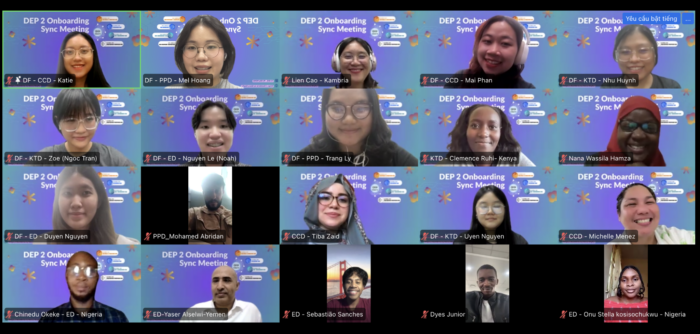
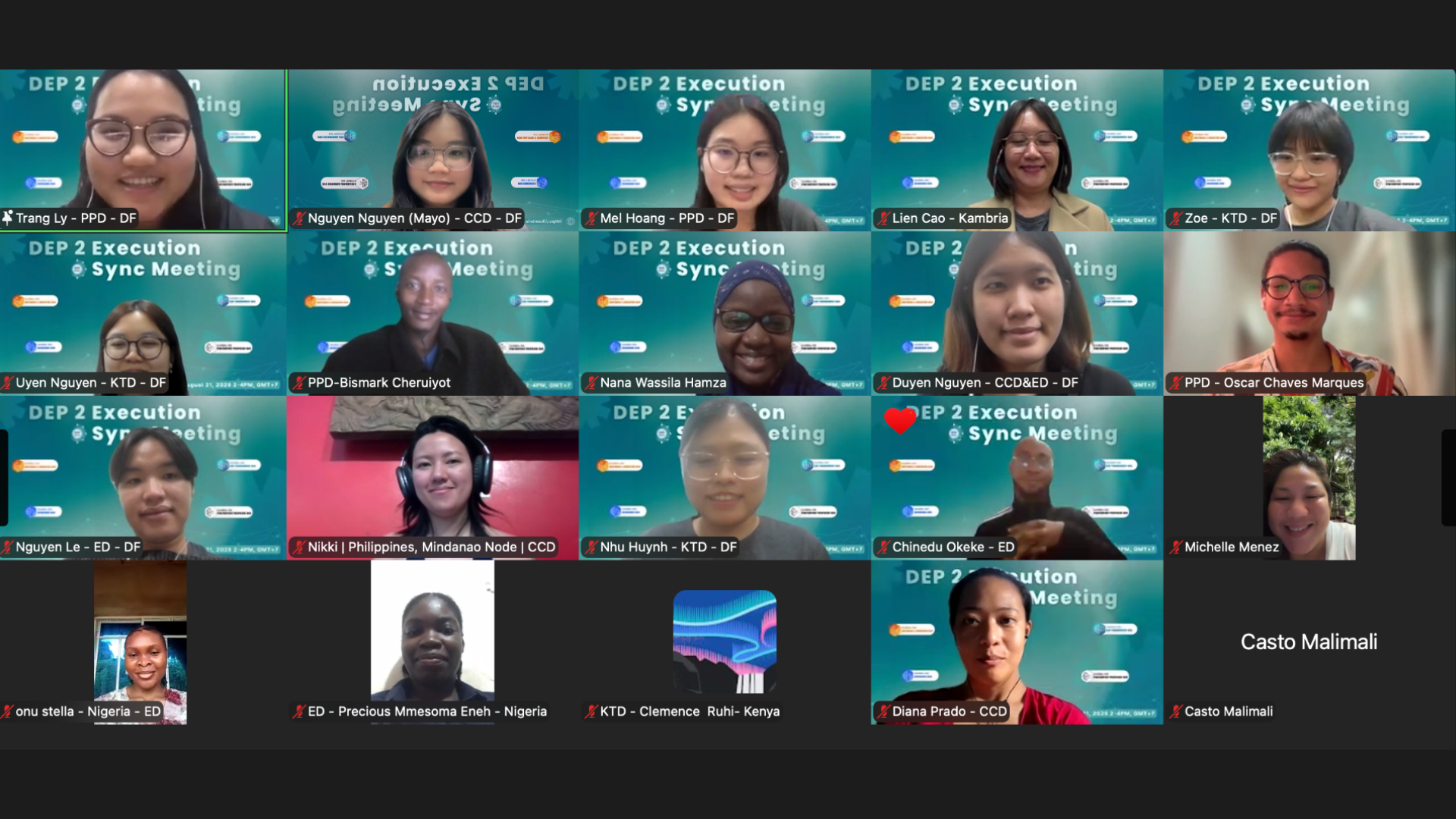
Kambria successfully organized the DEP 2 Execution Sync Meeting, bringing together members from all four DAOs to reflect on their progress, share lessons from implementation, and align on priorities for the remaining execution period.
After months of onboarding, proposal development, and early execution, the Sync Meeting created an important checkpoint for DAOs to look beyond their individual workstreams and see how the broader DEP 2 ecosystem is progressing. More than simply reporting completed tasks, the session focused on what DAOs have learned from turning plans into real-world action — including challenges around ownership, coordination, technical constraints, resource allocation, and adapting original plans when reality required a different approach.
Through DAO progress updates, facilitator reflections, execution-phase feedback, member stories, and partner sharing, the meeting highlighted a common lesson across DEP 2: decentralized execution works best when ownership is clear, communication is proactive, and teams are willing to adapt while staying focused on their final impact and regeneration goals.
Table of Contents
- 1. DAO Progress Updates & Execution Reflections
- 2. DEP 2 Execution Phase Feedback
- 3. Open Mic: Reflections from DAO Members
- 4. Partner Sharing: Cultural Preservation from Mindanao
- 5. Next Milestones and Heartfelt Thanks
Key Highlights:
- Progress Updates and Execution Reflections from all 4 DAOs:
- Cultural & Creative DAO (CCD)
- Exchange DAO (ED)
- KAT Tokenomics DAO (KTD)
- Participant-Proposed DAO / PesaPlay DAO (PPD)
- DEP 2 Execution Phase Feedback
- Open Mic: Reflections and Stories from DAO Members
- Partner Sharing from CCD’s Mindanao Cultural Node
- Next Milestones for the Remaining DEP 2 Journey
Esteemed Attendees:
- Ms. Liên Cao – Kambria Core Team
- DAO Facilitators from all four DEP 2 DAOs
- DAO Leads and Members from:
- Cultural & Creative DAO (CCD)
- Exchange DAO (ED)
- KAT Tokenomics DAO (KTD)
- Participant-Proposed DAO / PesaPlay DAO (PPD)
- Nikki – Representative from CCD’s Mindanao Cultural Node
- Members and contributors across the DEP 2 community
Full video:
- - - - - 🔹 - - - - -
1. DAO Progress Updates & Execution Reflections
Cultural & Creative DAO (CCD)
The Cultural & Creative DAO (CCD), led by Michelle Andrea Menez (Mitch) and the Facilitator team, focuses on cultural heritage, creative expression, and community storytelling. The DAO works with three cultural Nodes in the Philippines — Luzon, Visayas, and Mindanao — to document and transform local cultural knowledge into accessible creative outputs.
Key goals:
- 400 verified cultural & creative expressions
- 3,000 USDT regeneration goal
- Stronger collaboration between global DAO members and local cultural communities
CCD emphasized that verification goes beyond collecting media. Cultural materials need appropriate consent, community participation, and context to preserve the stories behind them responsibly.
The work is organized into three Lanes:
- Stories & Culture: Document cultural stories and knowledge
- Creative & Archive: Turn materials into creative outputs and digital archives
- Regeneration: Build partnerships and opportunities for long-term value
Key Lessons
The team highlighted the importance of:
- Turning confusion into communication and questions
- Strengthening ownership at the Lane level
- Maintaining direct communication between Nodes and Lanes
- Defining every task with a clear owner, deliverable, and deadline
Next Direction
CCD is now working toward a Virtual Museum that connects cultural documentation, stories, creative outputs, and future partnerships
Rewatch at this link:
Exchange DAO (ED)
The Exchange DAO (ED), led by Okeke Chinedu Emmanuel, is built around a simple idea: knowledge exists everywhere, but access to the right knowledge does not always exist. Through the CED platform, ED connects people who have knowledge, experience, and skills to share with those looking to learn.
Key goals:
- Create more opportunities for people to learn, share, and connect
- Activate meaningful learning exchanges through CED
- Build a growing network of Guides, Explorers, and partners
- Turn knowledge exchange into sustainable community impact and regeneration
During execution, ED faced several challenges, including:
- Technical issues on the CED platform
- Uneven participation among DAO members
- Difficulty communicating the ED concept to external audiences and potential partners
Rather than treating these only as obstacles, the team turned them into experiments and learning opportunities — testing the platform, documenting bugs, reorganizing responsibilities around active contributors, and simplifying communication materials.
Progress So Far
- Community meetups in Nigeria and Pakistan
- Structured CED platform testing completed
- 4 CED sessions completed
- 27+ users tracked on the platform
- Around 10 active Guides across 3+ knowledge domains
- Partnership discussions with Teachers for Peace Alliance, GivingTuesday, and Dosti
- A virtual workshop connecting Guides, Explorers, partners, and potential community members
Key Lessons
ED highlighted the importance of:
- Taking ownership in a decentralized structure
- Communicating blockers early
- Connecting activities back to impact and regeneration goals
- Turning plans into clear actions, owners, deadlines, and trackable outputs
- Working across Lanes as one ecosystem, rather than isolated tasks
Next Direction
ED will focus on user growth, CED session activation, partnerships and sponsorships, documentation, and turning community engagement into meaningful learning exchanges.
Rewatch at this link:
KAT Tokenomics DAO (KTD)
The KAT Tokenomics DAO (KTD) shared its progress toward building the infrastructure needed to support contribution recognition across DEP 2 DAOs. KTD focuses on implementing and testing the KAT Reward & Privilege Framework, a non-financial recognition system designed to encourage consistent, transparent, and ethical participation.
Key Goals:
- Develop KAT configurations that selected DAOs can adapt and use
- Build tools for contribution tracking, verification, and auditing
- Support cross-DAO integration and pilots
- Develop a reusable DAO operational toolkit
- Prototype an MVP web-based dashboard
Key Lessons
The KTD Facilitators highlighted several lessons from the execution period. First, the KAT framework needs to be clearly understood before implementation. Without a shared understanding, members can become overwhelmed or work toward outputs that do not align with the framework.
The team also learned the importance of establishing clear rules and agreement around contributor payments and allocations before execution begins. Ambiguous deliverables can also create duplicated work and delays, making it important to define clear outputs and dependencies between Working Groups.
Based on these lessons, KTD began simplifying its structure from three Working Groups into two main streams:
- Framework Support & Audit
- System Prototyping
Next Direction
For the remaining DEP 2 period, KTD is shifting from internal framework design toward cross-DAO execution and validation. The focus is to ensure that its frameworks and tools can be:
- Used by other DAOs
- Operated with low overhead
- Tested through real DEP 2 workflows
- Improved through cross-DAO feedback
The next phase therefore moves KTD from designing infrastructure to proving that it works in practice.
Rewatch at this link:
Participant-Proposed DAO / PesaPlay DAO (PPD)
The Participant-Proposed DAO (PPD) is currently executing the PesaPlay initiative, which focuses on improving digital financial literacy among children in Kenya through interactive and gamified learning. The DAO has developed a digital learning product where children can explore financial decision-making scenarios and topics such as budgeting and scam awareness.
Key Goals:
- Improve children’s digital financial literacy
- Test the learning product through real-world pilots
- Measure changes in learners’ knowledge and confidence
- Develop a sustainable model through payments and licensing opportunities
- Ensure strong child safety and data protection throughout implementation
Key Lessons
PPD’s execution highlighted the importance of turning product development into real-world testing. In its first pilot, around 31 learners completed the full pre- to post-assessment journey, with early results showing substantial improvement and positive feedback from participants.
The DAO also learned that decentralized execution requires more than assigning tasks. Effective execution depends on:
- A clear owner, scope, deadline, and expected output
- Strong follow-through and accountability
- Understanding cross-Lane dependencies
- Organizing work around milestones and tangible outputs
When the second school pilot could not proceed due to school calendar constraints, the team also demonstrated the importance of adapting quickly rather than stopping execution.
Next Direction
For the remaining phase, PPD will explore alternative ways to reach learners, including bootcamps, online learning, competitions, and direct family engagement. The team will also continue refining assessments for different age groups, improving the learning experience, establishing payment mechanisms, and developing licensing opportunities to support the initiative’s regeneration model.
The Facilitators emphasized an action-first approach: take action, produce, review, and improve quickly.
Rewatch at this link:
***
2. DEP 2 Execution Phase Feedback
After the DAO presentations, the Kambria team shared consolidated feedback from 21 DEP 2 members. Overall sentiment was positive, with satisfaction ratings between 3–5 and no low ratings reported.
What Worked Well
- Team structure & collaboration: Clearer roles helped members understand their responsibilities while encouraging collaboration across DAOs and countries.
- DAO Lead & Facilitator support: Participants valued having accessible support for clarification, coordination, and unblocking challenges.
- Working resources: Master Plans, dashboards, tracking templates, and weekly reporting provided useful structure for execution.
- Real-world impact: Members especially valued moving beyond planning into testing products, running sessions, engaging communities and schools, and developing partnerships.
Areas for Improvement
- Funding & reimbursement: Clarify reimbursement policies and processes before execution begins.
- Scope & communication: Establish a clearer single source of truth for goals, decisions, and changing priorities.
- CED technical issues: Account verification and platform bugs caused delays and remain an area for improvement.
- Workload distribution: Uneven participation and cross-team dependencies sometimes created bottlenecks; clearer contribution tracking could help.
- Documentation & onboarding: Simplify onboarding materials, reduce documentation overload, and make key resources easier to navigate.
Overall, DEP 2 has a strong execution foundation, with communication clarity, technical stability, workload distribution, and streamlined documentation emerging as key areas for improvement.
Rewatch at this link:
***
3. Open Mic: Reflections from DAO Members
Before the session, DAO members were invited to share their stories, reflections, memorable moments, and appreciation for their teammates on the DEP 2 Padlet. The Padlet brought together voices from DAO members across different countries and communities, creating a visual snapshot of the DEP 2 journey from the people who experienced it firsthand.
During the Open Mic, members were then invited to share some of the reflections they had already written on the Padlet. This gave participants the opportunity to elaborate on their experiences, celebrate meaningful moments, and hear directly from fellow DAO members about what they had learned and appreciated throughout the execution phase.
Explore the reflections shared by DAO members: https://padlet.com/ngoc_tran1/dep-2-execution-sync-r3ys9uawo6jnhk95
Stella – Exchange DAO
Stella reflected on her experience leading user-growth activities for Exchange DAO.
One of her biggest lessons was that building a community goes far beyond creating content or making announcements.
Community-building also requires:
- Understanding people
- Communicating ideas clearly
- Keeping participants engaged
- Documenting progress
- Finding accessible ways to explain complex ideas
During the execution phase, she contributed to infographics, social media content, communication materials, and storytelling around Exchange DAO and CED.
She also gave a special shoutout to DAO Lead Okeke and her teammate Precious for their guidance, ideas, and collaboration throughout the process.
For Stella, one of the most meaningful parts of DEP 2 has been being in a team where members are not simply discussing ideas, but building, learning, and figuring things out together.
Casto – Cultural & Creative DAO
Casto reflected on CCD as an opportunity to collaborate across countries, learn from different perspectives, and better understand cultures and experiences beyond his own environment.
For him, the decentralized community has created a space where participants can both contribute and continuously learn from one another.
Bismark – PesaPlay DAO
Bismark highlighted the progress of PesaPlay from a digital financial-literacy concept into something being tested with children in real learning environments.
His reflection emphasized one of the key themes of the entire Sync Meeting: DAO execution becomes especially meaningful when ideas leave the planning documents and begin creating visible impact in the real world.
***
4. Partner Sharing: Cultural Preservation from Mindanao
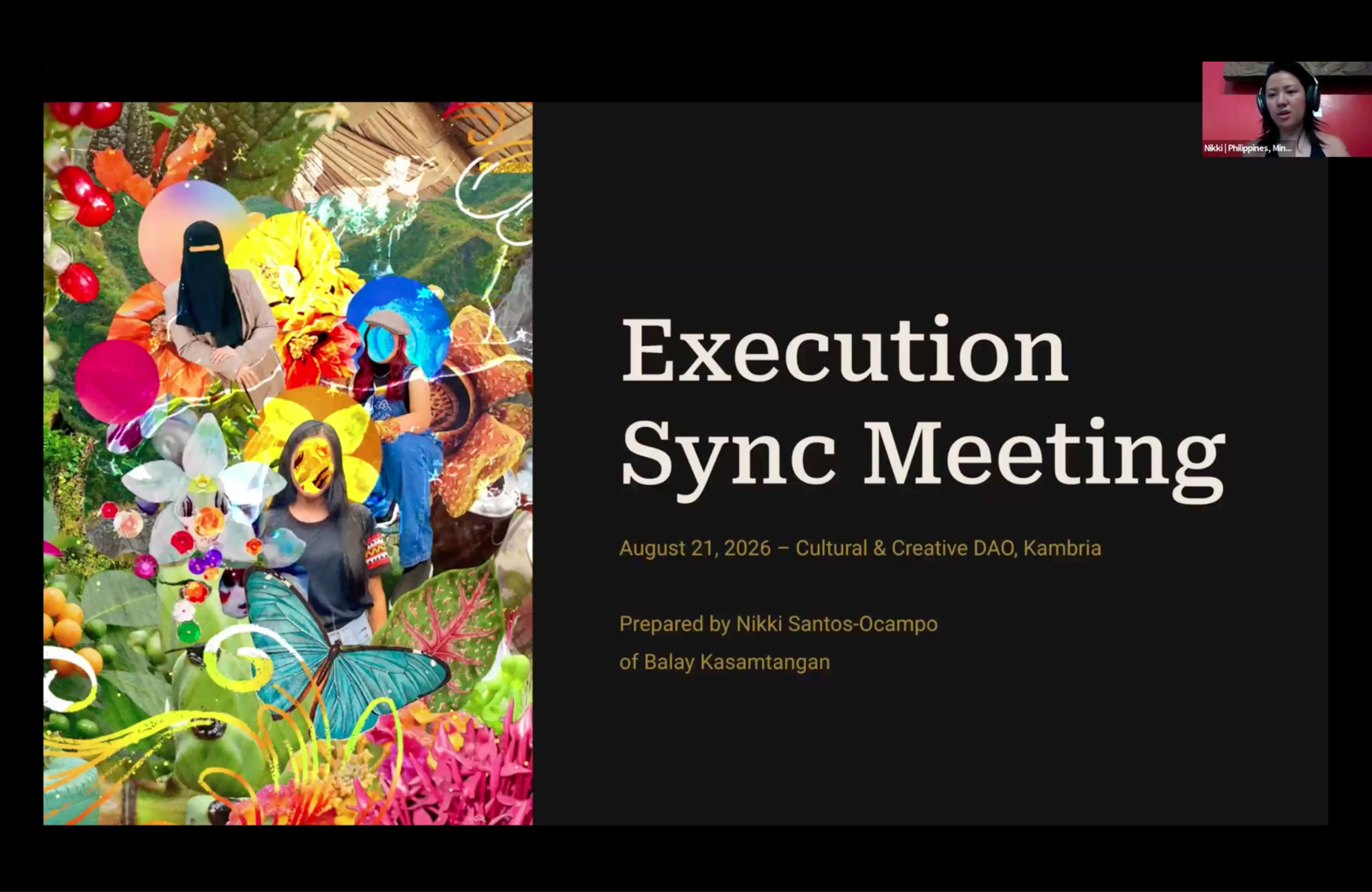
A special part of the meeting featured Nikki, representing CCD’s Mindanao Cultural Node.
She shared the experience of documenting cultural communities across Iligan City and Bukidnon in the Philippines, giving DEP 2 members a closer look at the realities behind CCD’s raw cultural materials.
The Mindanao project works with cultural bearers from different ethnolinguistic communities and explores what it means to preserve and carry cultural identity in the contemporary era.
Nikki emphasized an important principle:
Philippine culture is not monolithic.
Different islands and communities have distinct languages, clothing, histories, traditions, and experiences. Through its documentation, the Mindanao Node hopes to highlight this diversity and reinforce why it deserves to be understood, respected, and preserved.
Cultural Materials Produced
The Node has produced:
- 10 video interviews
- Extensive photographic documentation
- Cultural stories and community materials
- A special 360-degree video documenting one cultural space and conversation
Interviewees include cultural leaders and younger cultural bearers who are carrying the legacies of previous generations into the present.
The Reality Behind Cultural Fieldwork
Nikki also shared some of the logistical challenges behind producing these materials.
Some communities required long-distance travel between Iligan City and the mountainous areas of Bukidnon. The team sometimes had to travel for several hours, cross rivers, and navigate difficult terrain.
Weather created another major challenge. The Philippines had experienced weeks of heavy rain and storms, affecting infrastructure, road access, and internet connectivity. Rural communities are particularly vulnerable when landslides, flooding, and fallen trees cut off transportation routes.
Transportation and rising commodity costs also placed significant pressure on the project budget. In addition to travel expenses, the team provided honorariums to cultural bearers who shared their personal and community histories.
Despite these constraints, the Node succeeded in collecting a substantial body of cultural material for CCD.
Nikki closed with an important reflection for cultural work:
Quality should come before quantity.
Rather than viewing cultural documentation simply as a numerical output target, the value of the work lies in preserving stories responsibly, providing the necessary context, and respecting the communities whose knowledge is being shared.
These materials will now contribute to CCD’s ongoing work toward its Virtual Museum.
Rewatch at this link: https://youtu.be/4_mlDsQTfq8
***
5. Next Milestones and Heartfelt Thanks
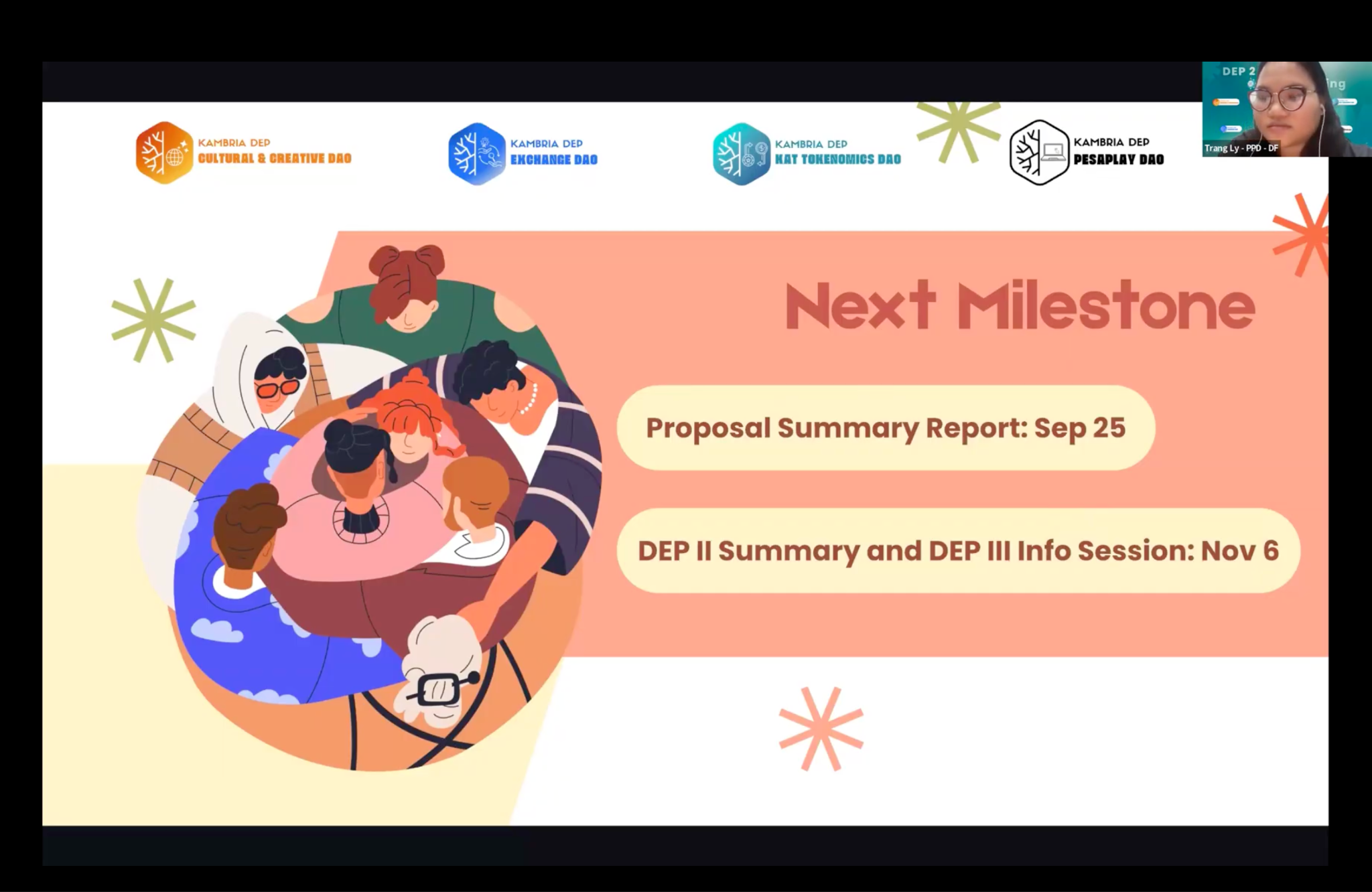
As DEP 2 moves toward its final execution period, each DAO will continue working on its remaining deliverables and regeneration goals while preparing to document what was achieved, what changed, and what was learned.
The major upcoming program milestones highlighted during the meeting include:
- Remaining execution period: DAOs continue completing and validating their final deliverables
- September 25, 2026: Finalize and submit the Proposal Summary Report
- November 6, 2026: DEP 2 Summary & DEP 3 Info Session
DAO-specific milestones will continue to be coordinated through each DAO’s Facilitators, shared workspaces, and Discord channels.
As the meeting closed, members were encouraged to reflect on their DAO journey so far, communicate actively during the remaining weeks, and use the lessons from other teams to strengthen their own execution.
Thank you once again to all DAO Leads, Facilitators, members, partners, and contributors who joined the DEP 2 Execution Sync Meeting and openly shared both achievements and challenges.
The meeting showed that meaningful decentralized collaboration is not about following a perfect plan. It is about people learning to coordinate, take ownership, adapt to reality, and continue moving toward a shared goal together.
As DEP 2 enters its final stretch, we look forward to seeing each DAO turn these lessons into concrete outputs, stronger collaboration, and real impact.
Stay connected with us on the Kambria Discord for upcoming updates and conversations as we move toward the conclusion of DEP 2.
Rewatch at this link: