
Table of Contents
- 1. DAO Updates
- 2. Share Execution Phase Feedback
- 3. Open Mic: Insights, Shoutouts, and Story Moments
- 4. Partner Sharing
- 5. Next Milestones & Heartfelt Thanks
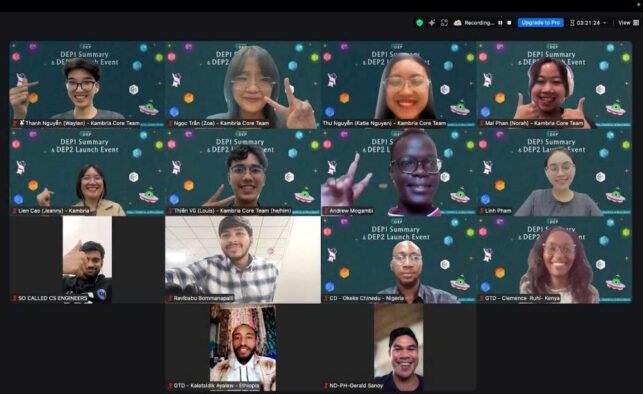
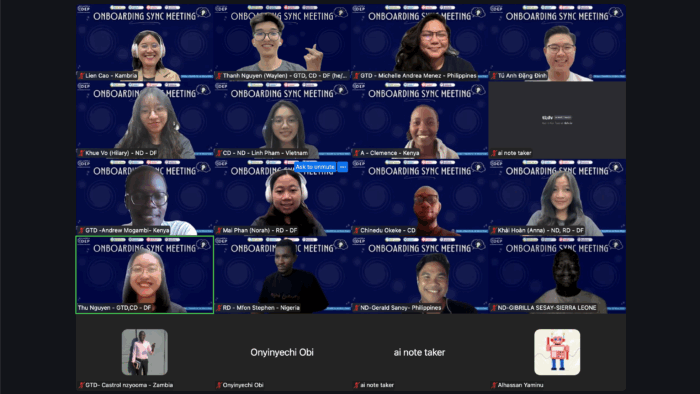
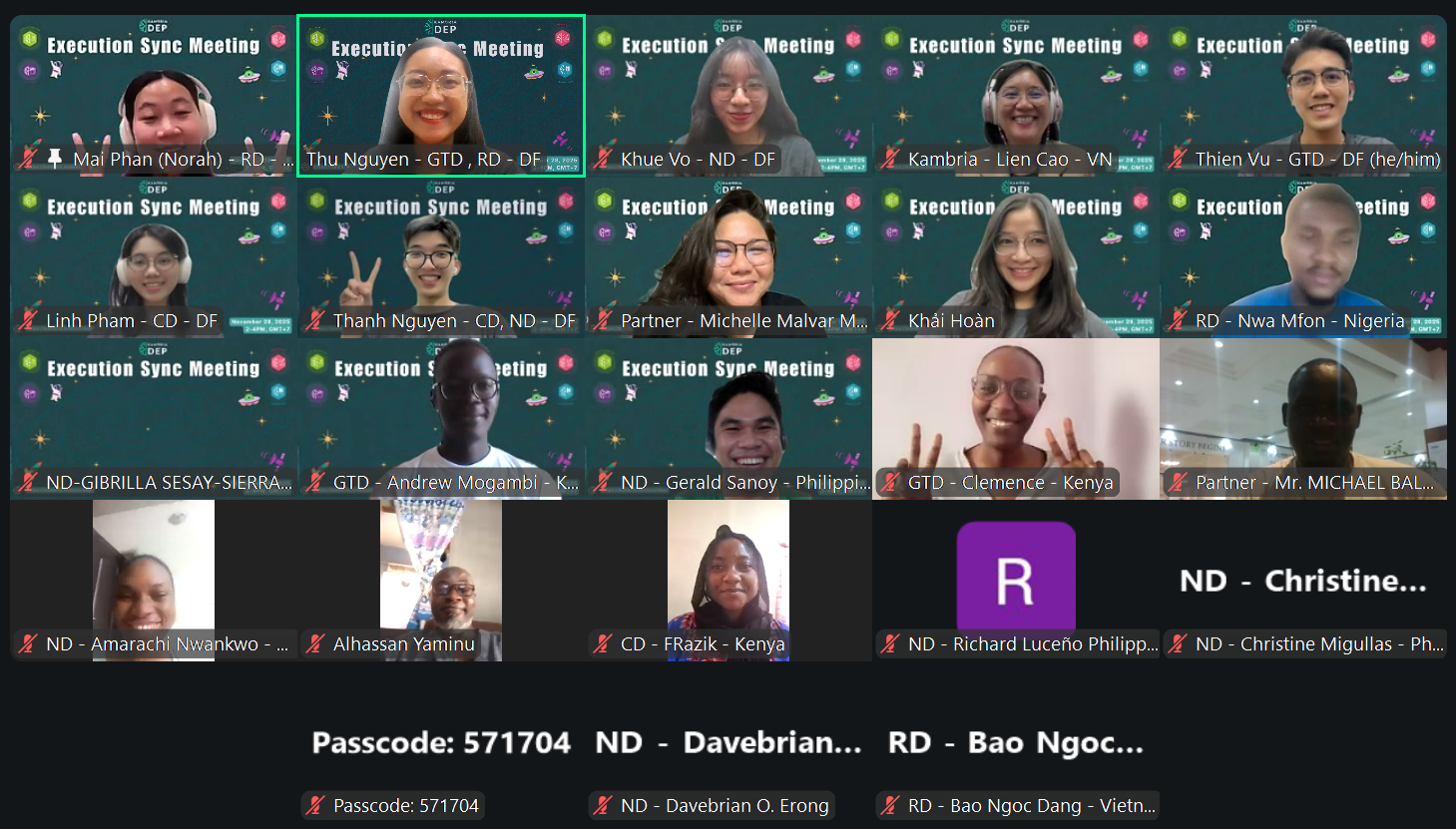
Kambria has successfully organized the DEP Execution Sync Meeting on Nov 28th, 2025.
This Meeting is to build collective momentum across the program. To do that, we first reflected on what each DAO had been doing and learning up to that point. Afterward, we opened space to cross-pollinate ideas, coordination practices, and encouragement. Finally, we identified shared challenges and opportunities that could benefit from collaboration.
Key Highlights:
- DAO Updates
- Share Execution Phase Feedback
- Open Mic: Insights, Shoutouts, and Story Moments
- Partner Sharing
- Next Milestones & Heartfelt Thanks
Esteemed Attendees:
- Ms. Liên Cao - Kambria Core Team
- DAO Facilitators of the 4 DAOs including:
- Mr. Thiên Vũ and Ms. Thư Nguyễn, for Grow Together DAO
- Mr. Thanh Nguyễn and Ms. Linh Phạm, for Connect DAO
- Mr. Thanh Nguyễn and Ms. Khuê Võ, for Nourish DAO
- Ms. Mai Phan and Ms. Thư Nguyễn, for Reflection DAO
- DEP Partners: Mr. Michael Bala Opodi and Ms. Mitch Meñez
- DAO Members
Full video:
- - - - - 🔹 - - - - -
1. DAO Updates
The DAO update segment served as a space to give visibility into each group’s progress and ensure alignment across the program. Each DAO presented a short proposal summary report, shared what they had completed, what was in progress, and what they planned to do next. After every presentation, we opened a brief discussion to address questions and exchange meaningful feedback. By the end of the segment, the DAO facilitators shared their reflections – highlighting the key lessons learned and the areas where we could continue to grow and improve together.
Grow Together DAO
Group A
Report
Community Reforestation & DAO Participation
The presentation highlighted several challenges commonly faced in DAO-based initiatives. A key issue is the expectation for members to show up in person and take real ownership of assigned activities. Because many DAO members live in different locations – for example, in Nairobi – attending physical events can be difficult, even when they genuinely want to participate.
Another challenge involves slow or last-minute voting, where members cast their votes only at the end of the voting window. This delay can disrupt planning and slow down decision-making. There is also a recurring misalignment between expectations and community realities, especially when some participants approach DAO work assuming there may be financial gain, only to discover that the nature of the initiative is different.
Partnerships and Field Activities
The initiative was supported by several partners, including Kenya Wildlife Service (KWS), Kenya Forest Service (KFS), the Catholic Diocese of Kisumu through the Catholic Justice and Peace Commission, and the Manyatta Social Justice CBO.
On 9 November, activities took place at the Kisumu Impala Sanctuary, where Kenya Wildlife Service staff assisted with planting 30 indigenous trees inside the park. Additional trees were sourced from the Kenya Forest Service, which also provided guidance on proper care and maintenance. In the Manyatta area of Kisumu, coordination with the Manyatta Social Justice CBO enabled the planting of 100 more trees, contributing to the broader reforestation effort.
Budget Overview
Nearly 60% of the total budget was dedicated to purchasing trees. Remaining funds covered tools, soil, and protective materials – such as chain links and posts – to safeguard saplings from damage inside the park. Other minor operational costs were also included as part of the project expenses.
Outcomes
The initiative resulted in:
- Four Climate Action Workshops / Community Reforestation Days
- More than 500 trees planted, primarily indigenous species
- A successful online skill-sharing platform, involving over six DAO members and volunteers
These outcomes demonstrate meaningful coordination between remote DAO contributors and local community partners.
Reflections
The sharing emphasized that local partnerships are essential for impactful community engagement. Collaboration at the grassroots level emerged as the central pillar of the project’s success. The experience reinforced the importance of aligning expectations, building trust, and working closely with people and institutions on the ground.
5-min-discussion
The session opened with a short reflection from Sanoi of Nourish DAO, who was invited to share first impressions after listening to Group A’s project report. The feedback emphasized strong appreciation for the group’s work, especially the focus on tree-growing efforts, which are increasingly essential in the current global context. The planting of a significant number of trees was highlighted as both timely and meaningful.
There was also a hope expressed that as these trees mature, they will become sustainable, long-term contributors to environmental well-being – reinforcing the belief that the impact will grow together with the trees themselves.
The conversation moved toward the shared social value that emerges when communities follow the growth journey of the trees, watching both environmental and collective impact unfold over time.
Next, the session transitioned to reflections on working with Decentralization to execute the proposal. A sharing segment from Clemence, a member of Group A, was introduced.
She described the experience as unique, noting that participating successfully required strong self-motivation and a willingness to step in whenever tasks needed attention. The project was characterized as distinctly different from past experiences, offering a new kind of engagement.
The facilitation team also recognized her consistent presence in meetings and meaningful contributions through careful observation and steady support for both the team and its leadership.
Rewatch:
Group B
Report
500 Native Narra Trees for Mt. Balagbag
The presentation from Group B, led on-site by Mitch, introduced an overview of the initiative to plant 500 native Narra sprouts across Mount Balagbag, a critical watershed supporting communities in Rodriguez, Rizal and parts of Metro Manila.
The project was implemented by Container Living PH in partnership with Balagbag Environmental Society Inc. (BESI), Bantay Gubat Rangers, youth volunteers, and Grow Together DAO’s members. Additional coordination with the Armed Forces of the Philippines provided essential support, especially in the context of recent Typhoon Fung-Wong and conflict-related disruptions in the area.
Implementation & Environmental Impact
Two major planting days were completed:
- The team assessed soil stability, identified safe restoration zones, and carried out full planting efforts despite challenging terrain, slippery slopes, and harsh weather conditions.
- Once grown, the sprouts are expected to collectively absorb 5 – 10 tons of CO₂ annually, improve water retention, reduce landslide risk, and support biodiversity in the mountain ecosystem.
The project also engaged students and local communities, inspiring youth-led participation and interest in future reforestation efforts.
Team & Partners
Besides members in charge of storyteller, documenter, QA and support, they partnered with BESI, and on-site photographer.
Skill Sharing & Community Engagement
Before November 16, BESI facilitated a skill-sharing session covering:
- Proper planting techniques
- Safe methods for climbing the muddy and dangerous mountain trail
Students from St. Teresa’s College, Quezon City also joined a second skill-sharing session ahead of the planting day.
Budget & Logistics
The budget included expenses for tools (purchased on November 14), meals, transportation on extremely slippery terrain, and operational support across two planting days. Tools were left with the Bantay Gubat Rangers for continued use.
A four-month monitoring budget will be provided to the rangers in monthly tranches from December 16, 2025 to March 16, 2026. Additional donated bags - sourced externally and not from the budget – were also given to support the rangers.
Challenges & Evidence
Photos and videos highlighted the challenging environment, including steep terrain, typhoon conditions, and the necessity of trained personnel for safety and protection. The scale of planning required was also emphasized.
The group’s efforts were later shared more widely, being reposted by three other pages, including Pilipinas.
Scientifically measurable environmental outcomes will only be available after the four-month monitoring period is completed.
Reflections
Group B’s experience differed from Group A due to the highly decentralized time zones of team members. The reflection emphasized the importance of aligning working hours more effectively so that everyone can fully support execution tasks.
A Greek proverb was shared to encapsulate the spirit of the work:
“Actions like these may not show immediate results, but they are done for the sake of future generations.”
The presentation closed with appreciation for the group’s resilience – especially given the storm impacts – and acknowledgment of the consistent updates, commitment, and contributions made throughout the project.
5-min-discussion
Frazik from Connect DAO shared first impressions about Group B’s project report. The feedback was very positive, praising the team’s dedication and commitment. The way the work was organized showed careful planning and passion for achieving impact. The willingness to face difficult conditions – including the presence of armed personnel for security during the planting – demonstrated the seriousness and determination behind the project’s goals.
Mitch, the on-site lead of Group B, reflected on the overall journey of executing the proposal remotely and in a decentralized way. Early on, when schedules were aligned and the team was still fresh, participation was high and collaborative.
However, challenges arose around technical aspects, especially setting up cryptocurrency wallets. Mitch highlighted the support from fellow DAO members – mentioning helping a member from Nourish DAO and receiving help from Andrew of Group A – to overcome these hurdles. This demonstrated the importance of peer support and collaboration within the DAO community.
Mitch also expressed a wish for better time-zone alignment in future projects to improve communication and teamwork, since current interactions often happen during off-hours.
Overall, Mitch summarized the experience positively, noting many lessons learned and room for improvement. Appreciation was extended for the efforts and contributions made throughout the journey.
Rewatch:
Grow Together DAO Facilitators’ sharing about Lessons learned and Improvements
The Facilitators of Grow Together DAO shared key insights based on observations throughout the project:
Lessons Learned
- Unpredictable Weather and External Conditions:
Storms and road damages frequently disrupted plans, highlighting the necessity for real-time monitoring and flexible scheduling to adapt quickly. - Weekly Catch-Ups Strengthen Alignment:
Regular meetings helped clarify weekly progress, identify next steps, and detect risks early. This enabled swift adjustments to plans as needed. - Transparent Updates Build Trust:
Consistent reporting kept all members informed and aligned, boosting motivation and cohesion within the teams. - Clear Documentation Supports Transparency:
Timely sharing of photos, receipts, and logs ensured accountability and made cross-team communication easier, benefiting both Group A and Group B. - Community Engagement Amplifies Impact:
High participation from children, church groups, volunteers, and community-based organizations (CBOs) increased local ownership and long-term care for the planted trees.
Improvements Noted
- Standardized Communication and Scheduling:
Using a unified communication platform – Discord – for updates, announcements, and meeting links, along with shared calendars, helped avoid missed meetings. - Cross-Leader and Member Collaboration:
Frequent check-ins and strong coordination between leaders and members improved problem-solving speed, team morale, and responsiveness. - Earlier Risk Assessment and Contingency Planning:
Challenges like tree availability, enclosure costs, and weather disruptions required last-minute changes. Introducing a clearer pre-execution risk checklist could reduce such late pivots in future projects.
Rewatch:
***
Connect DAO
Report
Digital Connection and Memory Games for Seniors
Connect DAO’s Group focuses on building intergenerational relationships by supporting seniors through digital literacy training, memory games, and guided TECD platform sessions. The TECD platform is a dedicated app designed to facilitate interaction between Seniors and SeniorBuddies via structured topics.
The team aims to host 30 engagement sessions from November to December 2025, targeting at least three seniors per session.
Team Composition
The 10-member team has clearly defined roles including Team Leader, Engagement & Lawfare, Publicity & Outreach, Tech Support & Photographer, Documentation & Storytelling, Scheduling, Volunteer, Session Host, Storyteller, and Session Host & Content Creator.
Execution Summary
- Internal testing of the TECD platform was completed to ensure smooth session delivery.
- Outreach efforts recruited 16 Seniors from personal networks, after initial challenges engaging the senior staff club at their university.
- The project is ongoing with active participation from seniors and volunteers documenting progress.
Challenges Encountered
- Initial collaboration with the senior staff club stalled, leading the team to pivot and recruit Seniors via personal networks.
- Technical issues with the TECD platform included difficulties with verification, sign-up, navigation, and session booking.
- Trust and privacy concerns arose, with some seniors uncomfortable uploading identification to the app.
- Inactivity of some DAO members affected voting processes and decision-making, despite repeated reminders.
Adjustments Made
- Recruitment shifted to leveraging personal connections to build a more engaged participant base.
- Close collaboration with the IT support team enabled rapid troubleshooting of technical problems.
- Creation of guideline videos improved user onboarding and session management for Seniors and volunteers.
- Clear communication fostered trust and reassured seniors about platform security.
- Inactive DAO members were removed and replaced by active team members to streamline governance.
Outcomes So Far
- 16 Seniors recruited and actively participated in sessions.
- Several pilot sessions conducted despite ongoing technical hurdles.
- Documentation and refinement of approach based on feedback is ongoing.
- The project remains on track to meet the goal of 30 sessions by the end of December 2025.
Reflections and Key Takeaways
- Strong team engagement and commitment persisted despite technical barriers.
- The first senior session revealed significant technical issues that require continuous improvement.
- While onboarding frameworks are solid, their success depends on reliable tools.
- Storytelling frameworks are prepared to share participants’ experiences as sessions progress.
Reflections on DAO Collaboration
- Collaboration was generally positive and supportive, with decentralization encouraging open participation.
- However, inactive members caused challenges for accountability and voting fairness.
- The voting system needs enhancement to exclude inactive members and better reflect active participation.
- Some DAO members lacked clarity on their roles and expectations, indicating room for better communication.
Suggestions for Future Improvements
- Prioritize resolving technical issues before further session rollouts.
- Implement participation-based voting systems to improve accountability.
- Enhance onboarding flows with clearer instructions, pre-session calls, and alternative communication methods.
- Address platform session timeouts and time zone-related email notifications to better suit Seniors’ needs.
5-min-discussion
During the recent session, we heard heartfelt reflections and insightful experiences from the ConnectDAO team and their collaborators, revealing the true impact and challenges of working in a decentralized, intergenerational project.
Sanoy from Nourish DAO shared their initial surprise and growing appreciation for the project focused on Seniors. They admitted that at first, they hadn’t fully grasped the importance of how seniors were being treated and engaged. But listening to the story, they recognized the project’s inclusiveness and the vital need to uplift senior citizens – many of whom are often overlooked or left behind in today’s fast-paced world. The speaker applauded the project as a true change-maker, reminding us all how important it is to listen to and value our elders.
Then, Frazik from Connect DAO shared a deeply personal and motivating reflection on their experience working in a decentralized team across different countries – Kenya and Nigeria. They emphasized how new and eye-opening the experience was, meeting people from diverse backgrounds and realizing what is possible when a capable, committed team comes together. Despite challenges like distance and technical issues, the team’s dedication never wavered. Freilich expressed pride and gratitude to be part of this effort, highlighting that we all will be seniors one day and deserve to have a strong support system in place. The project represents hope and practical action to ensure no one feels left behind.
Rewatch:
Connect DAO Facilitators’ sharing about Lessons learned and Improvements
Following this, the Connect DAO Facilitators took time to thank the members for their patience and hard work throughout the journey.
Lessons Learned
- Technical Readiness: Pilot testing with seniors revealed unexpected technical problems like app verification, internet connectivity, and audio issues. Addressing these promptly is critical for smooth execution.
- Decentralization: While decentralization is the project’s core spirit, there is room for improvement. The team recognized the need to distribute tasks more evenly, avoiding over-reliance on just a few active members.
- Proactive Reporting: Weekly meetings where members openly share their work plans and progress have been invaluable and will be maintained as a key habit.
Improvements:
- Clear and agreed participation expectations, especially attendance and commitment to follow-up tasks, to ensure accountability.
- Enhancing shared leadership among all members by maintaining transparent work plans, allowing everyone to contribute and stay informed on collective progress.
- Setting realistic weekly goals broken down from broader project phases to keep the team focused and aligned on actionable next steps.
In conclusion, despite ups and downs, the ConnectDAO journey is on the right track. The facilitators expressed pride in the team’s progress and their own learning as DAO Facilitators. This inspiring project is not only empowering seniors but also fostering a vibrant, collaborative community across borders.
Rewatch:
Nourish DAO
Group 1
Report
500 Nutritious Meals for Vulnerable Families in Freetown
Nourish DAO Group 1, led by Gibrilla Sesay, presented a heartfelt and impactful update on their execution progress. Their initiative focused on preparing and distributing 500 nutritious meals to vulnerable families, elderly individuals, street-connected youth, and unemployed community members across seven locations in Freetown, including Upgun, Ferry Junction, Texaco, Brama Lane, and others.
Through strong team coordination and careful planning, the group exceeded their original target - delivering 530 meals across two major distribution days on November 14 and November 22.
Photos and videos showcased the joy, gratitude, and meaningful human connection experienced during each distribution activity. Beneficiaries expressed sincere appreciation, reinforcing the significance of the work in a community heavily affected by poverty and rising living costs.
The team also emphasized their commitment to transparency by documenting expenses, collecting receipts, and capturing evidence to ensure accountability in fund usage. Their structured approach, supported by weekly consultations with Nourish DAO Facilitators, helped them stay aligned and successfully complete their execution plan.
5-min-discussion
During the discussion segment, members from across DAOs shared heartfelt reflections on Nourish DAO Group 1’s work. The first response came from Connect DAO’s Okeke, who expressed deep appreciation for the team’s commitment to serving vulnerable individuals. He highlighted how inspiring it was to see Nourish DAO providing hope and dignity to young people, mothers, elders, and street-connected individuals, and commended the team for exceeding their meal target. His question about whether the group had fully completed execution further emphasized his attentiveness and interest in the continuity of their impact.
Next, Yaminu - a documenter from Group 1 - shared an authentic and moving reflection from his on-the-ground experience. He spoke about the emotional reality of witnessing hunger in daily life and the profound fulfillment that comes from being able to provide food directly to those who need it most. Even though he lives far from the execution site, he expressed how meaningful it was to collaborate across borders and how it demonstrated the true spirit of decentralization. Working with teammates from diverse locations showed him the power of collective effort, unity, and cooperation under a DAO model. His closing remarks emphasized the team’s desire to expand inclusivity and continue improving the initiative with ongoing support.
Together, the discussion painted a vivid picture of Nourish DAO’s human-centred approach and the deep personal meaning the work held for its contributors.
Rewatch:
Group 2
Report
Nourishing Body and Mind: 1,000 Meals for Children in Geographically Isolated Communities of Siargao Island
Group 2 of Nourish DAO, led by Gerald Sanoy, delivered an inspiring and resilient implementation of their feeding initiative - “Nourishing Body and Mind: 1,000 Meals for Children in Geographically Isolated Communities of Siargao Island.” Despite facing three typhoons and logistical challenges unique to remote island regions, the team stayed committed to serving vulnerable children aged 4-6 years old across multiple last-mile communities.
The group executed the project from mid-November, adjusting schedules due to severe weather conditions, and worked closely with mothers’ groups, youth volunteers, community leaders, and their local partner, Espoir School of Life, who provided space and kitchen facilities.
Their five-day implementation successfully delivered 1,000 nutritious meals, benefiting 382 children across several isolated communities. The meals included vegetables sourced from local farmers, which not only supported nutrition but also stimulated local economic activity.
Throughout execution, the team emphasized compassion, dignity, and shared responsibility. Despite illnesses among volunteers and the difficulty of reaching remote areas via small pump boats during heavy rains, their dedication remained unwavering.
Their reflection highlighted the deep emotional reward of seeing children enjoy nourishing meals, the strong collaboration among mothers, and the sense of purpose gained from overcoming natural disasters for the sake of community impact.
5-min-discussion
During the open-floor discussion, Nourish DAO Group 2 received heartfelt praise from fellow DAO members across the cohort. Members expressed admiration for the team’s perseverance through extreme weather conditions and the courage required to reach island communities during continuous typhoons.
A particularly emotional reflection came from Mitch (Grow Together DAO), who, being from the Philippines, emphasized how challenging it can be to access such remote islands - especially with climate shifts and hazardous travel conditions. She commended the team’s integrity in fulfilling their promise despite storms, landslides, and logistical risks. The photos of smiling children deeply moved the participants, reinforcing the significance of the team’s effort.
From within Group 2, Richard shared his experience on the ground, describing how the children eagerly awaited each feeding session. He highlighted the strong cooperation among parents, who worked collaboratively to ensure meal preparation and distribution were successful - an encouraging sign that the initiative fostered lasting community engagement.
Rewatch:
Nourish DAO Facilitators’ sharing about Lessons learned and Improvements
Throughout the execution phase, both Group 1 and Group 2 of Nourish DAO demonstrated remarkable compassion, resilience, and commitment to community impact. At the same time, several important lessons emerged—highlighting areas where the team grew, and where processes can be strengthened for future DAO cohorts.
Lessons Learned
- Address Inactivity Promptly
Across both groups, inactive members created delays and extra pressure on the remaining active contributors. When tasks such as voting, coordination, and content preparation rely heavily on only a few members, workload becomes unbalanced and progress slows.
Recognizing inactivity early – and responding with check-ins, support, and clear expectations – proved essential to keeping the project moving forward.
- Decentralization Spirit Still Needs Strengthening
Although the DAO structure encourages shared responsibility, many key tasks remained concentrated in the hands of just 1–2 active members. This limited the decentralized nature of the work and created bottlenecks, especially during critical phases like proposal refinement, reporting, and community engagement.
Both groups showed that a stronger distribution of responsibilities would reduce stress, improve cohesion, and create a more empowered and collaborative DAO environment.
Improvements Implemented
- Establish Participation Expectations Early
To address misalignment, expectations for voting, weekly meeting attendance, and task completion were clearly outlined early in the phase. These guidelines ensured that every member understood their responsibilities and how their participation directly affected the progress of the group.
Clarifying these standards early helped create a more reliable and accountable working structure.
- Quick and Consistent Updates
Both groups adopted more frequent and transparent updates using Discord and shared documents.
Consistent communication made it easier to:
- Keep members informed of changes in plans or timelines
- Reduce confusion between leaders, members, and DAO facilitators
- Respond quickly to issues such as weather disruptions, resource shortages, or coordination challenges
This shift toward regular updates strengthened coordination and supported smoother execution from start to finish.
Rewatch:
Reflection DAO
Report
50 meaningful reflections from DAO participants across Grow Together, Nourish, and Connect DAOs
During the Execution Sync Meeting, Mfon from Reflection DAO presented an overview of their progress in gathering stories and documenting learnings across the program. Their core objective was to collect 50 meaningful reflections from DAO participants across Grow Together, Nourish, and Connect DAOs – capturing insights from tree planting, meal distribution, TECD sessions, and other community-led activities.
The team shared that they had mapped out potential contributors early on, decided on collection tools (Google Forms, interviews, Discord communication), and coordinated outreach across DAOs. However, timeline shifts in other DAOs, along with the late completion of execution forms, created delays for Reflection DAO since their work depends heavily on the progress of other groups.
In addition, member inactivity within Reflection DAO created obstacles in planning, communication, and execution. Despite these challenges, the team successfully collected 14 reflections so far and created a shared spreadsheet to track submissions. They also highlighted what they learned – particularly about consistency, follow-up, engagement levels, and the importance of early preparation. Screenshots and excerpts from collected reflections were shared during the presentation.
Although the initial target of 50 reflections has not yet been reached, the team expressed commitment to continuing the collection process as DAO activities progress.
5-min-discussion
During the open discussion, DAO members shared their impressions and experiences collaborating with Reflection DAO.
Mitch (Grow Together DAO) commented on the clarity of the Reflection DAO presentation, appreciating how the summary made it easy to digest the key improvements and challenges. She emphasized that across all DAOs, accountability and continuous improvement are universal needs. She said that because issues were clearly outlined and trackable, teams now have a better chance to correct and replicate good practices.
Okeke (Connect DAO & Reflection DAO) offered insight from both sides - as a leader in one DAO and a contributor in another. He emphasized that Reflection DAO is uniquely challenging because it depends entirely on the progress and timelines of all other DAOs. When other DAOs slow down, Reflection DAO is forced to wait. He highlighted the importance of constant communication across groups, since collecting stories requires coordination, follow-ups, and refinement of narratives. He also gave recognition to facilitators and members for their efforts despite the complexity of the task.
These discussions highlighted Reflection DAO’s role as both a listener and a connector across the entire program and the resilience required to document decentralized work.
Rewatch:
Reflection DAO Facilitators’ sharing about Lessons learned and Improvements
Lessons Learned
- Ownership is shared, not only the leader’s responsibility
Progress relies on every member being proactive, responsive, and responsible. Delays often stemmed from slow replies or unclear follow-ups, reminding the team that shared ownership is essential for smooth coordination. - Communication must be consistent
Inconsistent or slow communication caused postponements and confusion. Actively using Discord, providing timely updates, and responding quickly kept the team aligned and reduced friction. - Funding transparency is essential
Agreements on how to use funds – including purchases, incentives, and receipts – must be discussed early and documented clearly. Transparency prevents misunderstandings and supports smooth reporting. - Meeting attendance matters
Missed or late meetings slowed momentum, leading to unclear planning and delayed decisions. Consistent attendance is necessary for collective progress across decentralized teams.
Improvements Observed
- Weekly catch-up meetings established
Regular check-ins helped maintain alignment despite different time zones and varying engagement levels. These meetings strengthened communication and accountability. - Task tracking introduced
Thanks to newly introduced tracking sheets, tasks, owners, and deadlines became clearer. This improved clarity significantly enhanced coordination and follow-through. - Strengthened member engagement
Previously inactive members acknowledged their gaps and re-engaged, while unresponsive members were respectfully removed. New ambassador-members from three DAOs brought renewed energy and capacity. - Improved cross-DAO collaboration
Members from other DAOs willingly shared updates, milestones, and reflections, helping Reflection DAO collect higher-quality stories. Collaboration grew stronger over time. - Initial progress in reflection collection
The team successfully began receiving reflection submissions from multiple DAOs, marking a meaningful start for the Reflection Network.
Rewatch:
2. Share Execution Phase Feedback
During the Execution Phase, Linh and Khue from the Kambria team presented an overall analysis of feedback collected from 24 DAO members across all four DAOs. This shared reflection allowed the entire cohort to understand collective strengths, recurring challenges, and key opportunities for improvement moving forward.
2.1. Overview of Participation & Ratings
Feedback was collected from members representing all four DAOs, with Connect DAO providing the largest share of responses.
Across four evaluation categories, the results showed clear patterns:
- Execution Process & Materials Support received the highest ratings. Most members agreed that the guides, checklists, and structured materials effectively helped them carry out their tasks.
- XDAO Using showed mixed experiences. While some members found the platform straightforward, a notable group still felt confused or unsure about how to vote, upload, or navigate key functions.
- Engagement & Communication was mostly positive, but with a visible group rating it low. This reveals uneven participation, which aligns with challenges facilitators observed during the phase.
2.2. Key Feedback Themes
Theme 1 – Supportive Resources & Facilitation
Members consistently praised:
- The responsiveness and helpfulness of DAO Facilitators
- Clear guides, spreadsheets, and shared materials
- Hands-on mentorship that made teamwork feel smooth
- Structured reminders that kept groups on track
- The early distribution of funds, which enabled timely execution
- Strong commitment from local volunteers and community partners
These elements collectively helped stabilize workflows and ensured progress despite tight schedules and difficult field conditions.
Theme 2 – Communication Improvements Needed
While members appreciated the support, they also highlighted several communication challenges:
- Onboarding instructions were sometimes unclear or too long
- Some members were unsure about expectations or task definitions
- Technical steps (XDAO, MetaMask) caused confusion for new users
- A need for a simple visual roadmap and clearer step-by-step guidance
- More consistent cross-DAO communication
These insights point to the importance of simplifying instructions and ensuring every member feels confident in their role.
Theme 3 – Execution-Specific Challenges
Members shared several practical difficulties during execution:
- Uncertainty about how to upload or vote on XDAO
- Confusion regarding participation rules between local team members and partner team members
- Questions about project scope (e.g., tree types, voting rules, environmental actions, community partners)
- Lack of clarity around metrics, member scores, and result tracking
These highlight the need for clearer onboarding, consistent alignment across teams, and stronger guidance at the start of each phase.
Summary
The feedback session emphasized both the strengths of the cohort, especially facilitator support, cross-team collaboration, and the emotional dedication of members, and the key areas for improvement, such as communication clarity, technical onboarding, and role alignment.
These insights will directly guide how the Kambria team shapes the next DEP cycle, focusing on simplified processes, clearer instructions, and stronger support mechanisms to enable smoother, more decentralized execution across all DAOs.
Rewatch:
***
3. Open Mic: Insights, Shoutouts, and Story Moments
The Open Mic segment became one of the most heartfelt moments of the entire Execution Sync Meeting. It began with a short introduction, inviting members to share insights, shoutouts, and personal stories from their DAO journeys. Mai and Thien from the Kambria Team then premiered a touching video montage - a compilation of photos, clips, and reflections submitted by DAO members across all four DAOs. The video captured everything from tree-planting scenes on muddy slopes, to warm meal distributions, to seniors joining digital sessions, and members working late at night across time zones. It set the emotional tone for what followed: honest sharing, gratitude, and connection.
After the video, the floor opened for DAO members to speak:
- Mitch from Grow Together DAO was the first to step in. She offered a powerful story that highlighted courage, quiet leadership, and persistence. She gave a heartfelt shoutout to Kaletsidik – a young student and a very shy member, who rarely appears on camera but consistently shows strong commitment. Mitch shared how he responded instantly to messages, always showed readiness to help, and even volunteered to take on storytelling responsibilities despite feeling uncomfortable. Her appreciation for him emphasized what DAO collaboration truly means: people stepping up for each other, even when it’s difficult.
- Next, Yaminu from Nourish DAO Group 1 shared his reflections on partnership and humanity. He spoke about the deep bond formed between him and his teammate Sesay – how they reminded each other about meetings, supported each other during hectic schedules, and built a genuine connection despite never having met in person. His message highlighted a universal lesson: that DAO work, at its best, strengthens cooperation, empathy, and belief in collective good. He expressed gratitude to Sesay, the volunteers, and the facilitators, recognizing how meaningful it was to bring support to vulnerable communities and how these relationships continue to inspire future collaboration.
- Even though some members faced connectivity issues and couldn’t speak, their presence in the video and throughout the program was acknowledged with warmth.
The segment closed with shared gratitude from the facilitators, reflecting on how moving it was to hear these stories. The Open Mic became more than just a speaking session - it became a moment where everyone witnessed the emotional core of the DAO Experimentation Program: people from different countries, cultures, and experiences coming together to create real social impact.
The energy of this part left the room full of appreciation, connection, and renewed motivation for the journey ahead.
Rewatch:
***
4. Partner Sharing
The session began with a warm expression of gratitude to all members and DAO facilitators before transitioning back to the agenda, specifically the partner sharing segment. During the Execution Phase, external local delivery partners have played an essential role – offering timely support and valuable feedback to DAO members. This set the stage for a mini panel discussion on Partnership in DAO, moderated by Thanh, who guided the conversation toward key reflections on what has worked, what can be improved, and how DAOs can collaborate more effectively across different sectors.
After a short introduction, the moderator emphasized that “we cannot do everything alone.” The progress of every DAO is supported not only by its members but also by the partners who walk alongside them. Two guest speakers were then invited to the discussion.
Speaker Introductions
The session began with the first speaker, Mitch Menez, a familiar face to many participants. Mitch introduced herself as the Lead for Sustainability and Partnerships at a circular economy construction studio in the Philippines – an organization that has been operating for a decade, long before sustainability and byproduct synergy became widely discussed. She shared that her company has saved more than 3,000 tons of CO₂ emissions by reusing end-of-life materials and turning them into structures designed for disaster resilience and climate-vulnerable communities.
Her organization is also one of the few startups in the Philippines actively tracking their emissions and serving as a decarbonization partner for the Net Zero Carbon Alliance. Their work spans built-environment projects, tree planting, and even teaching sustainability to engineering students. As she explained, “we can’t save the world alone – we have to do all things together and at the same time.”
The second guest speaker, Michael Bala from the Manyatta Social Justice Center in Kenya, joined next. After greeting the group and sharing his screen, he introduced the organization’s motto: Organize, Educate, Liberate, Celebrate.
Manyatta Social Justice Center is a community-based, human rights-focused organization that trains local communities on their rights, social accountability, environmental issues, and ecological justice. He explained that their center also provides a safe space where community members can discuss, document, organize, and campaign for social change. Michael highlighted the power of “borderless organizing,” which aligns naturally with how DAOs operate.
He also shared the center’s belief in collective action, echoing Mahatma Gandhi’s reminder that “if you want to walk far, walk with others,” especially in the fight against poverty – a core priority in Kenya’s Vision 2030. He then showcased community activities such as World Cleanup Day and explained that Manyatta promotes social justice through community engagement and mentorship.
Panel Discussion – Benefits and Challenges
The discussion moved into the first question: the biggest benefits or challenges when partnering with a DAO.
Mitch, representing the private sector in the Philippines, shared that being a startup gives her flexibility, so partnerships themselves are not difficult. The real challenge comes from timelines and work schedules of other business partners. Many hold 9-to-5 jobs and can only participate after working hours. Coordinating across time zones – Vietnam’s afternoon, Kenya’s morning, and the Philippines’ evening – also adds complexity. Even though the decentralized spirit is energizing, not everyone can adapt to late-night work or flexible scheduling. She emphasized that alignment of schedules across partners is essential for partnership efficiency.
Next, the moderator raised a broader question:
How can participation remain accessible and inclusive for community members who may not know about DAOs or lack access to online platforms?
Michael responded first, explaining that Civil Society Organizations (CSOs) play a crucial bridging role. As representatives of their communities, CSOs amplify the voices of people who may not otherwise be heard. He emphasized that he is “the eyes and ears” of his community, carrying information back to them – including the successes and challenges of programs like this DAO initiative. Their organization has done this consistently since 2021 and will continue, including on the upcoming Human Rights Day on December 10. CSOs, he explained, connect communities with larger organizations and ensure that information flows both ways.
Mitch added her reflections, commending the work of CSOs and NGOs from her own experience. She noted that their NGO partners, such as the Philippine Wildlife Rangers, had submitted video messages when they couldn’t attend live. She emphasized that reaching communities effectively often requires collaboration with localized CSOs/NGOs – organizations who can communicate directly, explain context, and meet people where they are. These groups serve as the “eyes, ears, and mouth,” ensuring information travels to those without internet access or familiarity with DAO concepts.
She reinforced that partnership networks should extend beyond first connections so that information reaches deeper, more diverse communities.
Closing Reflections
As the conversation moved toward closing, the moderator reiterated that partnership cannot stop at initial contact points. True collaboration grows through extended branches – and partners like those present today can help bring DAO-based programs to people who have never heard of DAOs but still want to make a difference. The team expressed hopes for future collaboration, especially for the upcoming DEP II.
Michael then added an important logistical reflection. He explained that because of time barriers, he occasionally misses invitations – receiving them too late or not seeing them in time. Sending meeting notifications two to three days earlier would help partners plan better. He also mentioned that his community is highly active and often faces many challenges, meaning that if he is absent from a meeting, he is likely working directly with the community. He reiterated the importance of prompt communication to help overcome time-related barriers.
The session closed with the hosts expressing deep appreciation to all partners for their contributions and thanking Thanh for moderating this conversation.
Rewatch:
***
5. Next Milestones & Heartfelt Thanks
The next milestones include:
- Proposal Summary Report is on Dec 5, 2025 (Reflection DAO is on Dec 19, 2025)
- 2nd Payment is on Dec 12, 2025 (Reflection DAO is on Dec 26, 2025)
- DEP I Summary and DEP II Info Session is on Feb 6, 2026
For full details, you can always check the official website: https://kambria.io/docs/dep/program-timeline/
Thank you to all our Members for showing up with such heart and purpose at the DEP Execution Sync Meeting. Your engagement, your voices, and the way you leaned into every part of the discussion turned this gathering into something truly powerful. Your commitment is what keeps our momentum alive – and we’re excited to carry this energy forward as we step into the next phases together. Here’s to the impact we’re building, and to the journey we continue to share.
Rewatch: